
Stop Crabgrass Without Hurting Your Bermuda Lawn
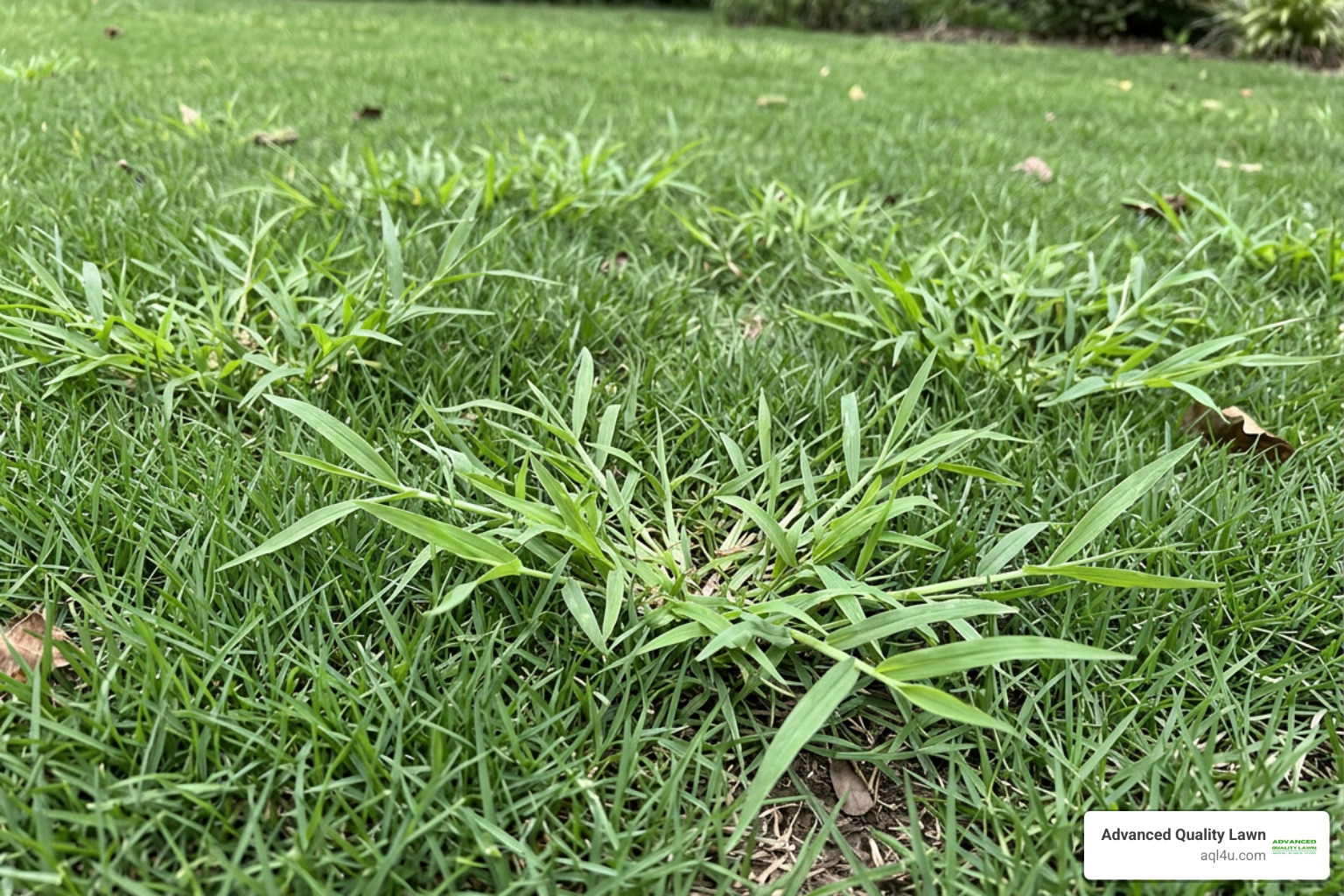
The best crabgrass killer for Bermuda grass depends on whether the weed has sprouted. Use a Bermuda-safe pre-emergent such as dithiopyr or prodiamine before crabgrass germinates. If crabgrass is already visible, spot-treat young plants with a product specifically labeled safe for Bermudagrass that contains quinclorac.
To protect your lawn:
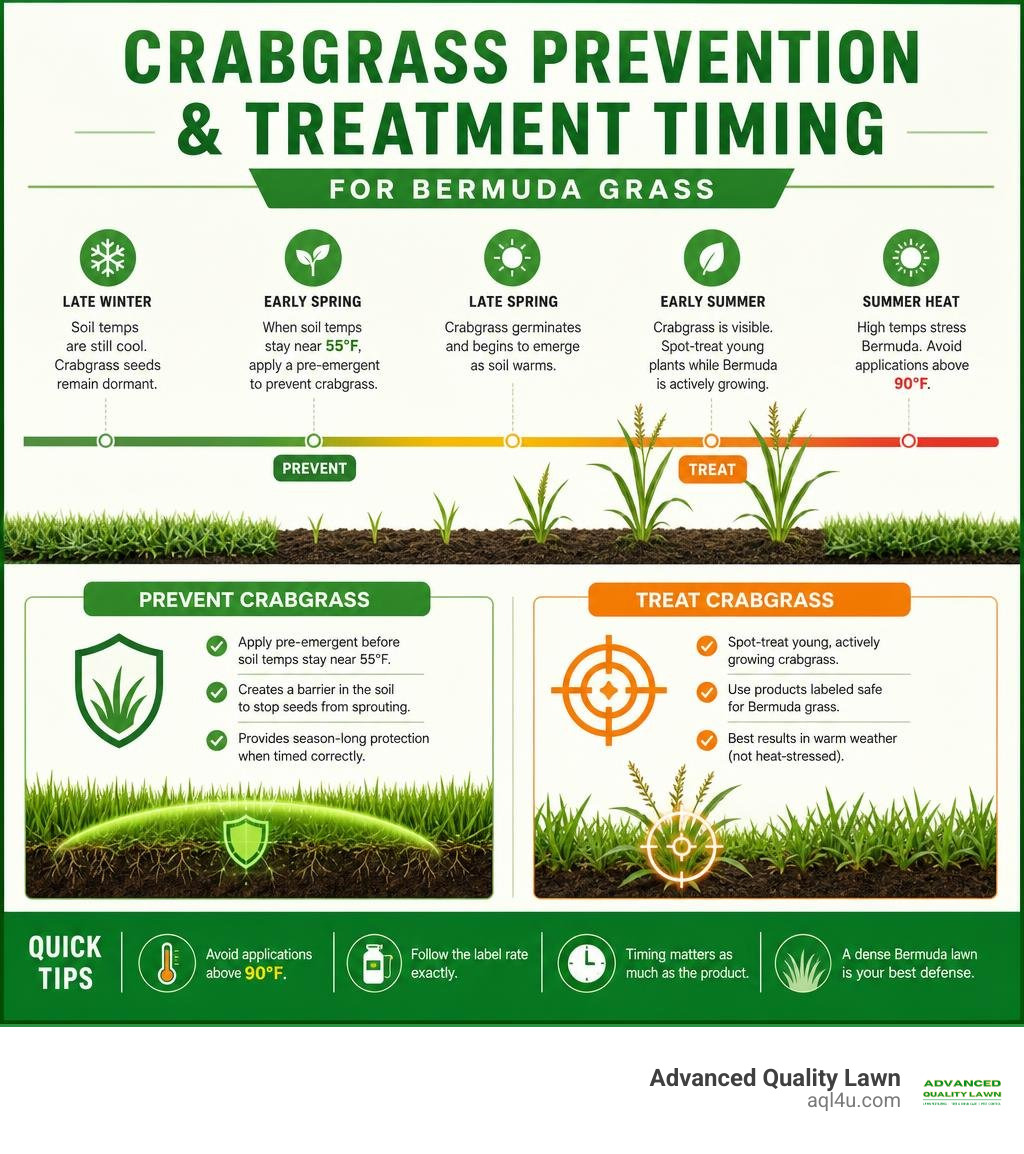
- Apply preventer before spring soil temperatures stay near 55 degrees F.
- Spray post-emergent products only when Bermuda is actively growing and not heat-stressed.
- Follow the label rate exactly, avoid applications above 90 degrees F, and never assume a product labeled for another warm-season grass is safe on Bermuda.
Crabgrass can spread fast through thin turf, but a dense Bermuda lawn paired with well-timed weed control gives it far fewer places to grow. Some Bermuda-safe post-emergent products may cause temporary yellowing, especially when used during hot weather or applied too heavily, so careful timing matters as much as the product itself.
I’m Andrew Day, owner of Advanced Quality Lawn, and our team brings more than 30 years of lawn care experience to helping homeowners choose the best crabgrass killer for Bermuda grass and use it without unnecessary turf injury. Next, we’ll break down when to prevent crabgrass and when to kill plants that are already growing.
Choosing the Best Crabgrass Killer for Bermuda Grass: Pre-Emergent vs. Post-Emergent
Selecting the correct chemical treatment requires understanding whether you are preventing dormant seeds from sprouting or eliminating mature weeds. A robust pre-emergent herbicide establishes a microscopic chemical barrier at the soil surface that disrupts weed seedling cell division as soon as germination starts. Applying the best pre-emergent weed killer for lawns creates a continuous blanket of protection that stops emerging root tips before they break through the surface. Active ingredients like dithiopyr provide up to 4 months of residual barrier protection while maintaining safety for Bermuda turf root systems.
Once weeds emerge, pre-emergent barriers cannot destroy established foliage. That is when a selective post-emergent herbicide becomes necessary. Post-emergent options target actively growing plants through systemic leaf absorption and root uptake. Modern post-emergent chemistries rely on quinclorac to disrupt cellular development, causing weeds to curl, turn red or purple, and die within 7 to 14 days. Consulting a comprehensive crabgrass control guide 2026 helps you coordinate these dual approaches throughout the growing season.
| Feature | Pre-Emergent Herbicides | Post-Emergent Herbicides |
|---|---|---|
| Primary Target | Germinating seeds before emergence | Actively growing weed foliage |
| Common Actives | Dithiopyr, Prodiamine, Pendimethalin | Quinclorac, Sulfentrazone, Fenoxaprop |
| Optimal Timing | Early spring when soil hits 55°F | Late spring through summer on young weeds |
| Application Method | Granular broadcast or liquid barrier | Targeted foliar spot-spray or broadcast |
| Activation Needs | Requires 0.5 inches of water to set barrier | Needs 24-hour dry window to absorb |
| Bermuda Impact | Safe for mature root zones | May cause temporary yellowing over 90°F |
Granular Barriers for Spring Prevention
Granular pre-emergent products offer reliable, long-lasting performance across large residential lawns. As spring approaches, monitor local 4-inch soil temperatures. When soil temperatures consistently hover between 50°F and 55°F, crabgrass seeds prepare to break dormancy.
Using a calibrated rotary broadcast spreader ensures uniform granule distribution across the entire lawn. Missed strips or thin spots break the continuity of the barrier, allowing opportunistic seeds to take root. Active ingredients like prodiamine offer exceptional residual longevity, while dithiopyr provides added flexibility because it can control crabgrass seedlings in the 1-leaf to 3-leaf stage if applied slightly late. After spreading granular preventers, apply approximately 0.5 inches of irrigation to wash the active chemistry off the granules and lock it into the top inch of topsoil.
Foliar Knockdowns for Summer Outbreaks
When summer heat arrives and established crabgrass surfaces in thin areas or along hot pavement edges, foliar knockdowns are necessary. Liquid post-emergent herbicides travel directly through the leaf cuticles into the vascular system of the weed.
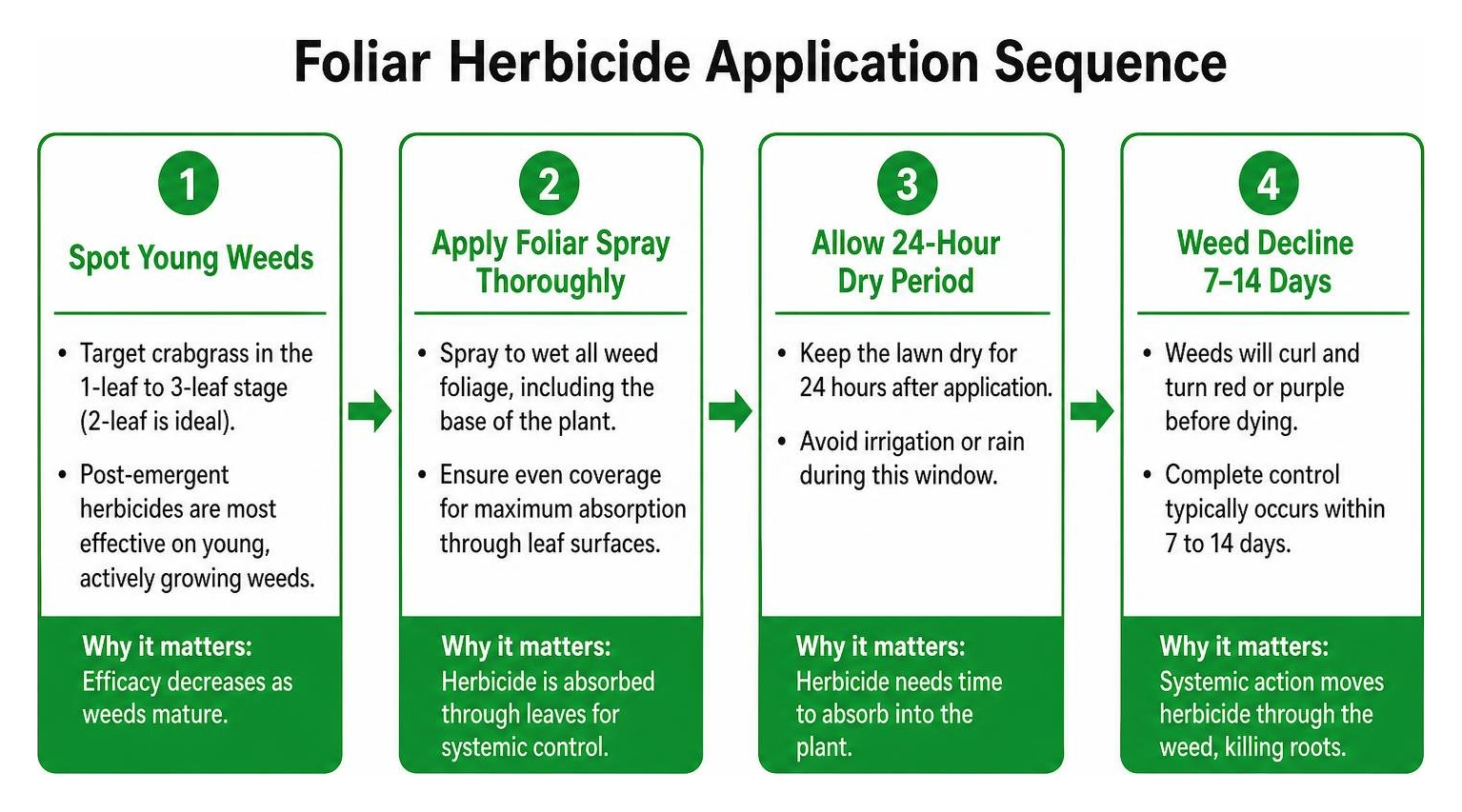
University research, including Penn State Extension research on postemergence grass weed control, highlights that post-emergent efficacy decreases as weeds mature from simple 2-leaf plants into sprawling, multi-tiller clumps. When targeting mature weeds, adding a methylated seed oil or non-ionic surfactant helps the spray penetrate waxy leaf surfaces. Using the best herbicide for crabgrass at the correct tiller stage ensures complete root knockdown rather than superficial leaf burn.
Herbicide Formulations and Chemical Safety for Warm-Season Turf
Bermuda grass is an aggressive, resilient warm-season turfgrass that spreads via vigorous stolons and rhizomes. However, applying the wrong herbicide formulation can cause severe chemical stress, stunting, or scorched patches. Finding the best way to get rid of crabgrass requires selecting products specifically tested and labeled for warm-season turf species.
Selective herbicides function by exploiting biochemical differences between targeted weeds and desired turf. When applied at exact label rates, Bermuda grass rapidly metabolizes the active ingredients without sustaining permanent damage. If applied during severe drought or at excessive rates, this metabolic pathway can become overwhelmed, leading to temporary chlorosis or stunted runners.
Safe Active Ingredients in the Best Crabgrass Killer for Bermuda Grass
The most reliable active ingredients for Bermuda turf balance aggressive weed control with lawn safety:
- Quinclorac: Highly effective against crabgrass, foxtail, and signalgrass. It acts as a synthetic auxin that disrupts plant cell wall synthesis, causing rapid vascular collapse in weeds while leaving Bermuda unharmed.
- Dithiopyr: Serves a dual function as a robust pre-emergent and early post-emergent control for young 1-tiller weeds. It halts micro-tubule formation during cell division.
- Prodiamine: A classic dinitroaniline pre-emergent that binds tightly to organic matter, forming a dependable barrier that inhibits early root growth of germinating weed seeds.
- Sulfentrazone: Frequently blended with quinclorac to accelerate foliar desiccation and provide post-emergent control of sedges and broadleaf weeds.
Liquid vs. Granular: Finding the Best Crabgrass Killer for Bermuda Grass
Choosing between liquid concentrates and dry granular formulations depends on the size of your lawn, equipment availability, and whether you are preventing or eliminating weeds.
Granular products are well suited for broadcast pre-emergent applications. They settle deep into the thatch and are easily activated by rain or sprinkler systems. Liquid formulations applied with a handheld or backpack pressure sprayer excel at precision spot-treatments. Liquid applications allow exact control over droplet size and direct foliar contact. Professional turf managers following Syngenta GreenCast technical guidelines for warm-season weed control often pair spring granular pre-emergents with targeted summer liquid spot-treatments. This layered method delivers season-long control while minimizing total chemical output.
Step-by-Step Application Protocol to Protect Bermuda Grass
Achieving spotless weed eradication without harming your Bermuda lawn requires a systematic application routine. Follow our proven steps for optimal herbicide results:
- Check Soil and Ambient Temperatures: Verify that daytime temperatures remain between 60°F and 85°F. Never spray post-emergent herbicides if temperatures exceed 90°F.
- Time Your Mowing Cycle: Mow your Bermuda turf 2 days prior to spraying to allow weed foliage to expand slightly. Wait at least 2 days after application before mowing again so the active chemistry can translocate throughout the weed root systems.
- Calibrate Spray Equipment: Measure your treatment zone accurately. Calibrate your sprayer using clean water to determine the exact volume delivered per 1,000 square feet.
- Mix Herbicide and Adjuvants Carefully: Add clean water first, followed by the measured herbicide concentrate. If the product label recommends a surfactant, add it last to avoid excessive foaming.
- Spray Evenly on Target Weeds: Apply a fine to medium droplet spray directly over the target weed leaves until they are moist, avoiding heavy runoff that can pool in the soil.
- Protect the Drying Window: Ensure the lawn remains dry for at least 6 to 24 hours post-treatment according to the specific product label instructions.
Reviewing a dedicated crabgrass removal guide 2026 will keep your seasonal timing sharp and your lawn healthy.
Temperature Restrictions and Discoloration Recovery
High temperatures dramatically increase the risk of herbicide phytotoxicity. When ambient temperatures rise above 90°F, Bermuda grass accelerates its transpiration rate, causing it to absorb and process foliar herbicides too quickly. This can result in localized yellowing or leaf-tip browning.
If your lawn shows signs of chemical stress, follow these recovery measures:
- Provide light, regular irrigation cycles in the early morning to alleviate heat and moisture stress.
- Avoid applying high-nitrogen synthetic fertilizers immediately after injury, which can force tender top growth.
- Apply a chelated foliar iron treatment to restore deep green coloration without stressing the root zone.
- Allow 10 to 14 days for the vigorous Bermuda rhizomes to push fresh green leaf blades.
Caring for Newly Seeded and Sodded Bermuda Turf
Young, developing Bermuda grass requires special care. Newly laid sod and freshly germinated seedlings lack the extensive root structure needed to metabolize selective herbicides safely.
- Seeded Lawns: Do not apply pre-emergent barriers before or immediately after seeding. Wait until your new lawn has emerged and been mowed at least 3 to 4 times before applying selective post-emergents.
- Sodded Lawns: Allow newly installed sod rolls to establish firm root knitting into the native soil, which typically takes 3 to 4 weeks. Wait for at least 3 active mowings before introducing post-emergent crabgrass controls.
Frequently Asked Questions About Bermuda Crabgrass Control
Can crabgrass killer for Bermuda grass be used on mixed lawns with Zoysia or St. Augustine?
You must always read the product label before applying an herbicide to mixed warm-season turf. While Bermuda and Zoysia share tolerance for ingredients like quinclorac, St. Augustine grass is sensitive to many common post-emergent crabgrass killers. Applying standard quinclorac or MSMA blends to St. Augustine will cause severe tissue burning and turf decline. Always ensure every turf variety in your lawn is listed as safe on the manufacturer label before spraying.
How do I fix yellow patches on Bermuda grass after spraying herbicide?
Yellowing after a post-emergent application is usually temporary. To speed up recovery, irrigate the lawn with 0.5 inches of water to rinse lingering residues from the soil surface and relieve plant stress. Apply a liquid iron supplement to stimulate chlorophyll production without forcing excessive surge growth. Avoid spraying any additional herbicides on the affected areas for at least 3 to 4 weeks while the turf recovers.
When is the cutoff date for applying crabgrass preventer in 2026?
The ideal window for early spring pre-emergent application occurs between late February and mid-April, or just before local soil temperatures consistently hit 55°F at a 2-inch to 4-inch depth. For season-long control extending through autumn, apply a split booster treatment 6 to 8 weeks after the initial application. This second round reinforces the chemical barrier against late-germinating summer annual weeds.
Conclusion
Maintaining a clean, weed-free Bermuda lawn requires a balanced program of timely pre-emergent prevention and precise post-emergent control. By applying proven chemistries like dithiopyr and quinclorac within safe temperature limits, you can easily knock out invasive crabgrass while keeping your Bermuda grass thick and healthy.
Lawn care success also relies on good cultural practices like proper mowing, deep watering, and balanced fertility. If you want a lush, green lawn without the hassle of measuring chemicals and tracking soil temperatures, turn to our experienced team. Advanced Quality Lawn delivers guaranteed results backed by exceptional customer service across Akron and the surrounding Northeast Ohio communities. Explore our professional lawn care and maintenance programs today to keep your yard healthy throughout the year.