
Visualizing and Measuring Your 1000 Sq Ft Lawn
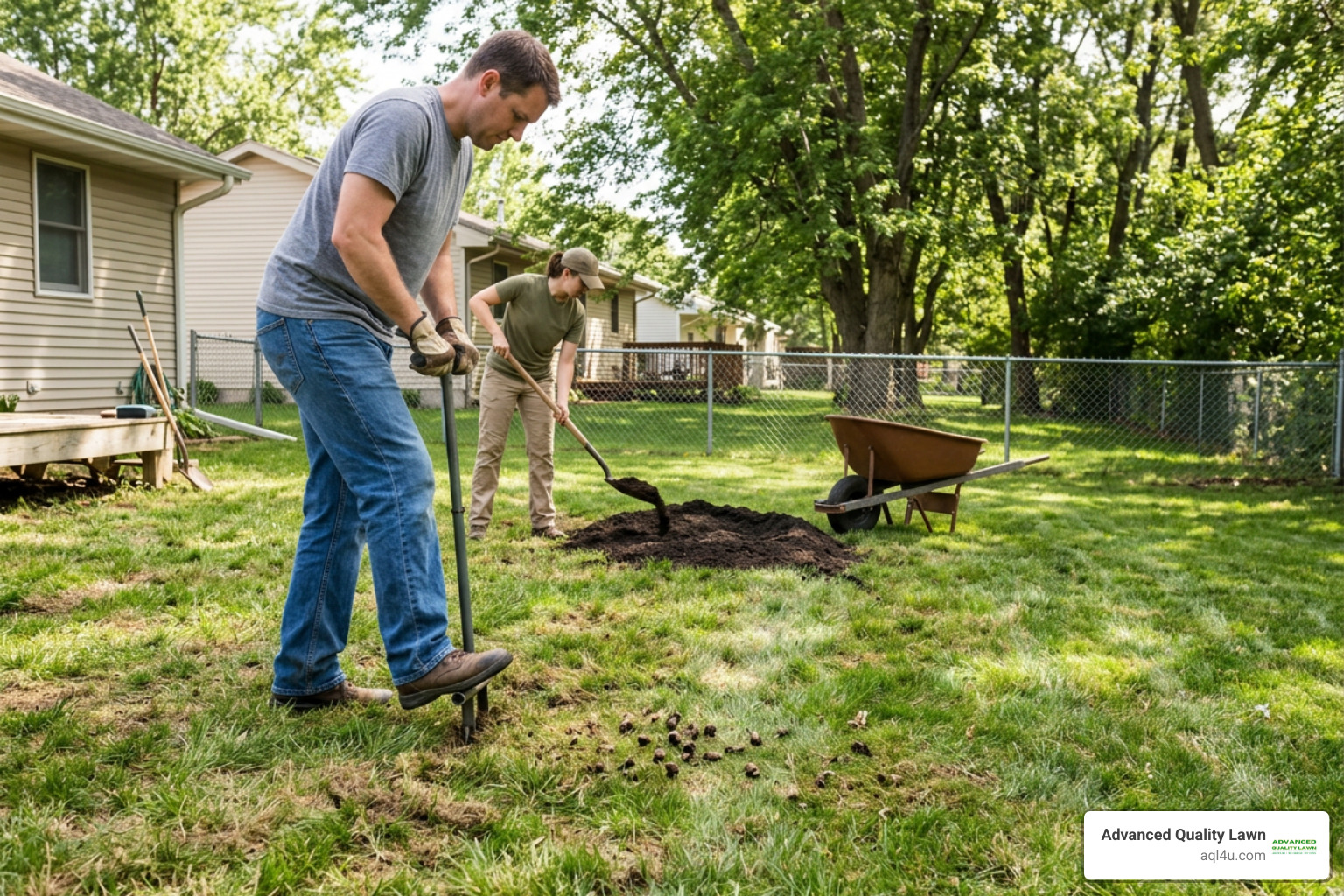
Getting an accurate grasp of your lawn size makes every lawn care chore simpler. Most turf care products like fertilizer bags, grass seed, weed control, and soil amendments list their application rates per 1,000 square feet. When you know your exact boundary lines, you avoid buying extra materials or under-applying treatments that leave your grass vulnerable to disease.
Real-World Size Comparisons
To picture the space, think of two average two-car garages parked right next to each other. That layout equals roughly 1,000 square feet of total ground space.
If your yard is shaped like a classic rectangle, common dimensions include:
- A 20 foot by 50 foot strip along a property boundary
- A 25 foot by 40 foot backyard play area
- A 43 foot by 23 foot rectangular side lawn
- A circular lawn area with a 36-foot diameter
You can also visualize eight standard pickup trucks parked closely in a double row. Because the footprint is relatively small, taking the time to map it accurately gives you complete control over your maintenance budget.
Step-by-Step Square Footage Calculation
Measuring a yard does not require expensive tools. A simple 100-foot tape measure, a rolling measuring wheel, or a digital laser measure will give you exact numbers in minutes.
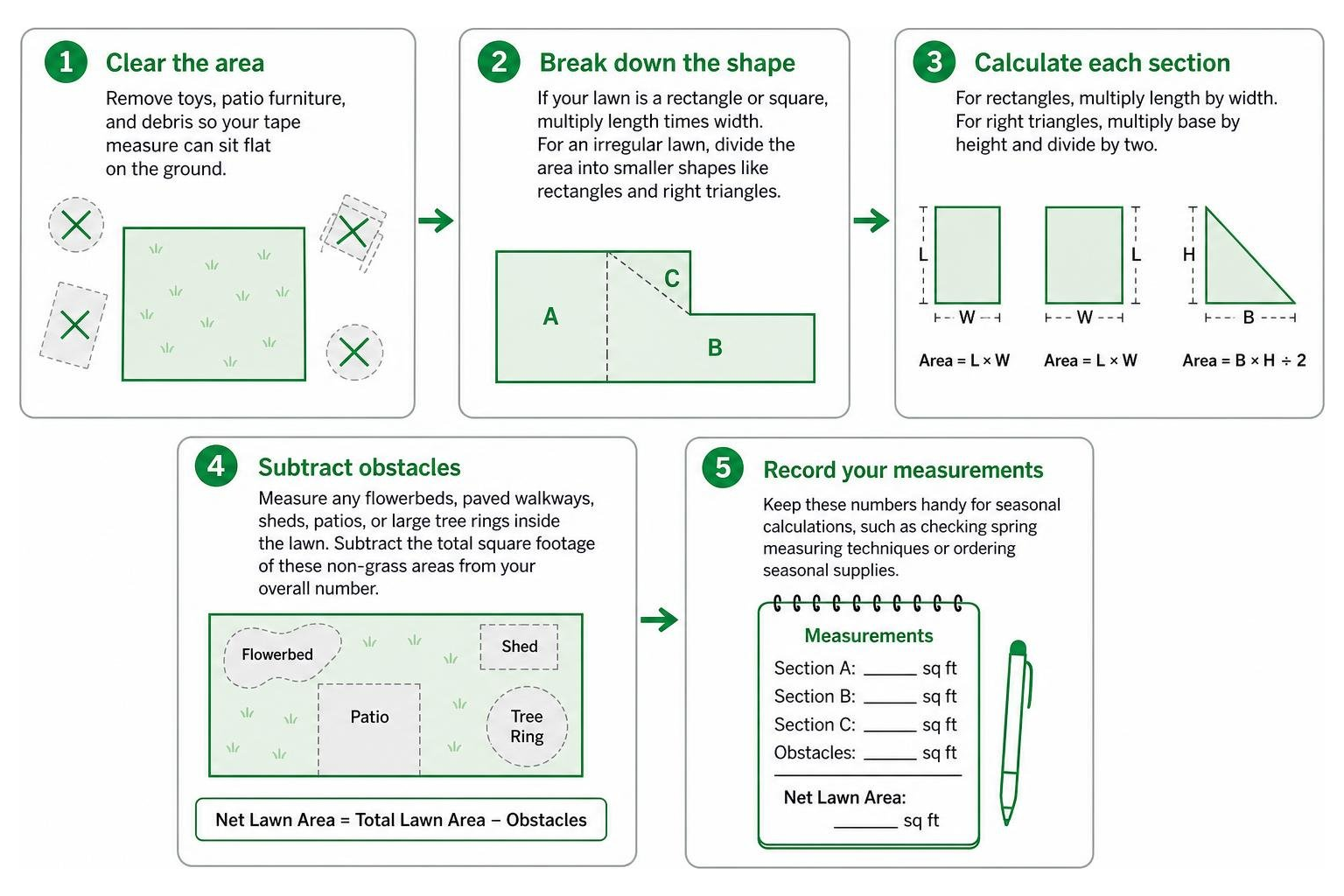
- Clear the area: Remove toys, patio furniture, and debris so your tape measure can sit flat on the ground.
- Break down the shape: If your lawn is a perfect rectangle or square, simply multiply length times width. For an irregular lawn, divide the open grass into smaller geometric shapes like rectangles and right triangles.
- Calculate each section: For rectangles, multiply length by width. For right triangles, multiply base by height and divide by two.
- Subtract obstacles: Measure any flowerbeds, paved walkways, sheds, patios, or large tree rings that sit inside the lawn. Subtract the total square footage of these non-grass areas from your overall number.
- Record your measurements: Keep these numbers handy for seasonal calculations, such as checking spring yard measuring techniques or ordering seasonal supplies.
Soil Preparation and Topsoil Requirements
Healthy grass starts with good ground beneath it. In our Northeast Ohio service areas, heavy clay soil often creates hardpan layers that restrict root growth. Whether you are building a new lawn or repairing an existing one, having adequate topsoil depth ensures proper moisture retention and nutrient absorption.
How to Calculate Topsoil for a 1000 Sq Ft Lawn
Bulk topsoil is measured and sold in cubic yards, while lawn area is measured in square feet. To convert square feet to cubic yards, multiply your total square footage by your desired depth in inches, then divide by 324.
Always add roughly 10 percent to your final order to account for natural settling and compaction after watering. Conducting an Akron lawn soil testing assessment before ordering will help you determine whether your existing ground needs pH adjustments or compost blending.
| Lawn Project Type | Topsoil Depth (Inches) | Cubic Yards Needed (Exact) | Recommended Order (+10% Buffer) |
|---|---|---|---|
| Topdressing / Overseeding | 0.5 inches | 1.54 cubic yards | 1.7 cubic yards |
| Light Resurfacing | 2.0 inches | 6.17 cubic yards | 6.8 cubic yards |
| New Lawn Installation (Standard) | 4.0 inches | 12.34 cubic yards | 13.6 cubic yards |
| New Lawn Installation (Deep Root) | 6.0 inches | 18.52 cubic yards | 20.4 cubic yards |
Keep delivery logistics in mind. Most standard single-axle dump trucks carry a maximum of 5 to 6 cubic yards of topsoil per trip because wet dirt weighs between 1,800 and 2,200 pounds per cubic yard. A deep 6-inch installation for a new yard will require multiple deliveries scheduled back to back.
Soil Conditioning and Topdressing
If your existing turf feels spongy or shows thin patches, excessive organic matter might be blocking water and air from reaching the root zone. Managing dense thatch allows new seed and nutrients to penetrate deeper into the earth.
Combining annual core aeration and overseeding with light topdressing works wonders on compact soils. Applying a thin quarter-inch to half-inch layer of pulverized topsoil or rich leaf compost across your lawn provides ideal seed-to-soil contact without suffocating existing grass blades. For a 1,000-square-foot lawn, you will only need about 1.5 cubic yards of material for this rejuvenating process.
Installation Breakdown: Seed vs. Sod Costs
Installing a new lawn gives you two main options: establishing turf from grass seed or laying fresh sod rolls. Both methods produce a lush yard when paired with proper soil preparation, but they come with different upfront investments, labor requirements, and establishment timelines.
Seeding a Compact Yard
Seeding is the most budget-friendly method for establishing a 1,000-square-foot yard. High-quality cool-season grass seed blends like Kentucky bluegrass, perennial ryegrass, and fine fescues typically require 5 to 10 pounds of seed per 1,000 square feet for a brand-new lawn.
When budgeting for professional seed installation on a 1,000 to 2,000 square foot area, expect overall costs between $1,200 and $2,600. This price covers rough grading, fine soil preparation, applying the best fertilizer for new grass, spreading seed evenly, and rolling the surface.
Germination typically takes 7 to 21 days depending on moisture levels and soil temperature. You can save money by doing light surface raking and debris removal yourself before the crew arrives.
Sodding for Instant Turf
Sod offers an instant lawn with immediate curb appeal and erosion control. Fresh sod is harvested and delivered on wooden pallets, with each pallet covering about 400 to 500 square feet. For a 1,000-square-foot lawn, you will need two to three full pallets of sod.
Installing sod for a 1,000 to 2,000 square foot space generally ranges from $5,000 to $7,000 for full professional service, which includes site prep, premium sod rolls, labor, and perimeter trimming. Sod requires diligent watering during the first two weeks so the shallow root system bonds with the native soil. Scheduling your project during the active fall growing season landscaping period gives sod roots the optimal cool weather to establish before winter.
Seasonal Maintenance and Nutrient Management
Small lawns require steady, thoughtful care throughout the growing season. Because smaller footprints show weeds, bare spots, and discoloration very quickly, sticking to a clear seasonal schedule keeps your property looking clean and uniform.
Determining Fertilizer Rates for a 1000 Sq Ft Lawn
Fertilizer bags display three numbers that represent the percentage of Nitrogen (N), Phosphate (P), and Potassium (K). A general guideline for residential lawns is to apply 1 to 2 pounds of actual nitrogen per 1,000 square feet across the growing season.
To calculate how much physical fertilizer you need:
- Look at the first number on the fertilizer bag (the nitrogen percentage). A 20-0-5 blend contains 20 percent nitrogen.
- Divide your desired nitrogen rate (such as 1 pound) by the decimal equivalent of the nitrogen percentage (0.20).
- 1 divided by 0.20 equals 5 pounds of fertilizer product needed for your entire 1,000-square-foot lawn.
Using a properly calibrated walk-behind rotary spreader ensures even distribution. For deeper insights into seasonal nutrient requirements, check our lawn fertilizer ultimate guide 2026.
Mowing, Watering, and Weed Prevention
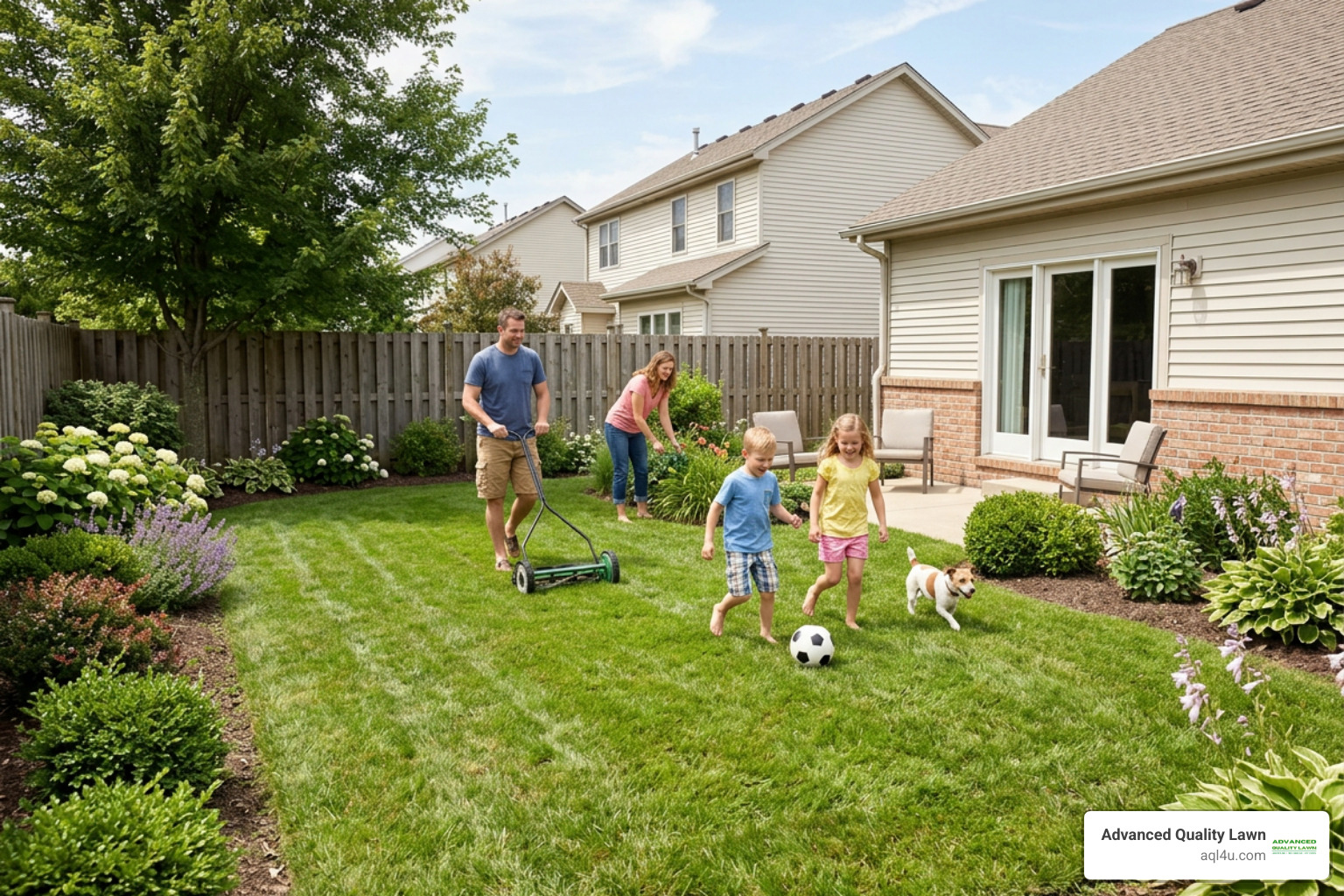
Routine mechanical care keeps your compact turf resilient against pests and weeds. Keep these essential practices in mind:
- Mowing: Follow proper techniques for mowing your lawn by keeping grass heights between 2.5 and 3.5 inches. Never remove more than one-third of the grass blade in a single mowing session. A standard residential walk-behind mower can cut a 1,000-square-foot lawn in about 10 to 15 minutes.
- Watering: Review our guide on how to water your lawn for optimal growth. Turf needs 1 to 1.5 inches of water per week, including rainfall. Water early in the morning so the blades dry quickly in the sun.
- Weed Control: Stop invasive species like crabgrass and dandelions before they sprout by applying the best pre-emergent weed killer for lawns in early spring.
- Pest Defense: Subsurface pests like white grubs can destroy small turf areas rapidly. Apply the best way to kill grubs in lawn in mid-summer before root damage occurs.
Frequently Asked Questions About Small Lawns
What does a 1000 sq ft yard look like?
A 1,000-square-foot yard looks like two typical two-car garages placed side by side. It is often laid out as a 20 foot by 50 foot rectangle or a 43 foot by 23 foot side lawn. It is a compact space that fits comfortably on townhome lots and smaller suburban properties.
What is the annual maintenance cost for a small lawn?
Annual maintenance costs for a 1,000-square-foot lawn usually range between $300 and $700 depending on the specific services you choose. Professional fertilization, weed control, and pest treatments for a compact lot generally cost between $35 and $65 per application visit. Bundling your seasonal applications together provides affordable lawn care Akron homeowners can depend on year after year.
How much topsoil is needed for overseeding a small yard?
For topdressing and overseeding, you only need about 1.5 cubic yards of pulverized topsoil or rich compost. This amount creates an even half-inch layer across 1,000 square feet, which protects new grass seeds while keeping existing grass healthy and upright.
Conclusion
Caring for a compact lawn offers great rewards without demanding endless hours of yard work every weekend. By taking accurate spatial measurements, selecting the right topsoil depths, and applying balanced seasonal nutrients, you can build a lush, thick lawn that enhances your property.
At Advanced Quality Lawn, we provide dependable, science-backed treatments tailored to local soils across Akron and surrounding Northeast Ohio communities. Whether you need help diagnosing soil issues, establishing fresh seed, or setting up ongoing lawn care maintenance, our team is here to help your yard thrive through every season.