
Summer Crabgrass Is Taking Over Ohio Lawns Right Now
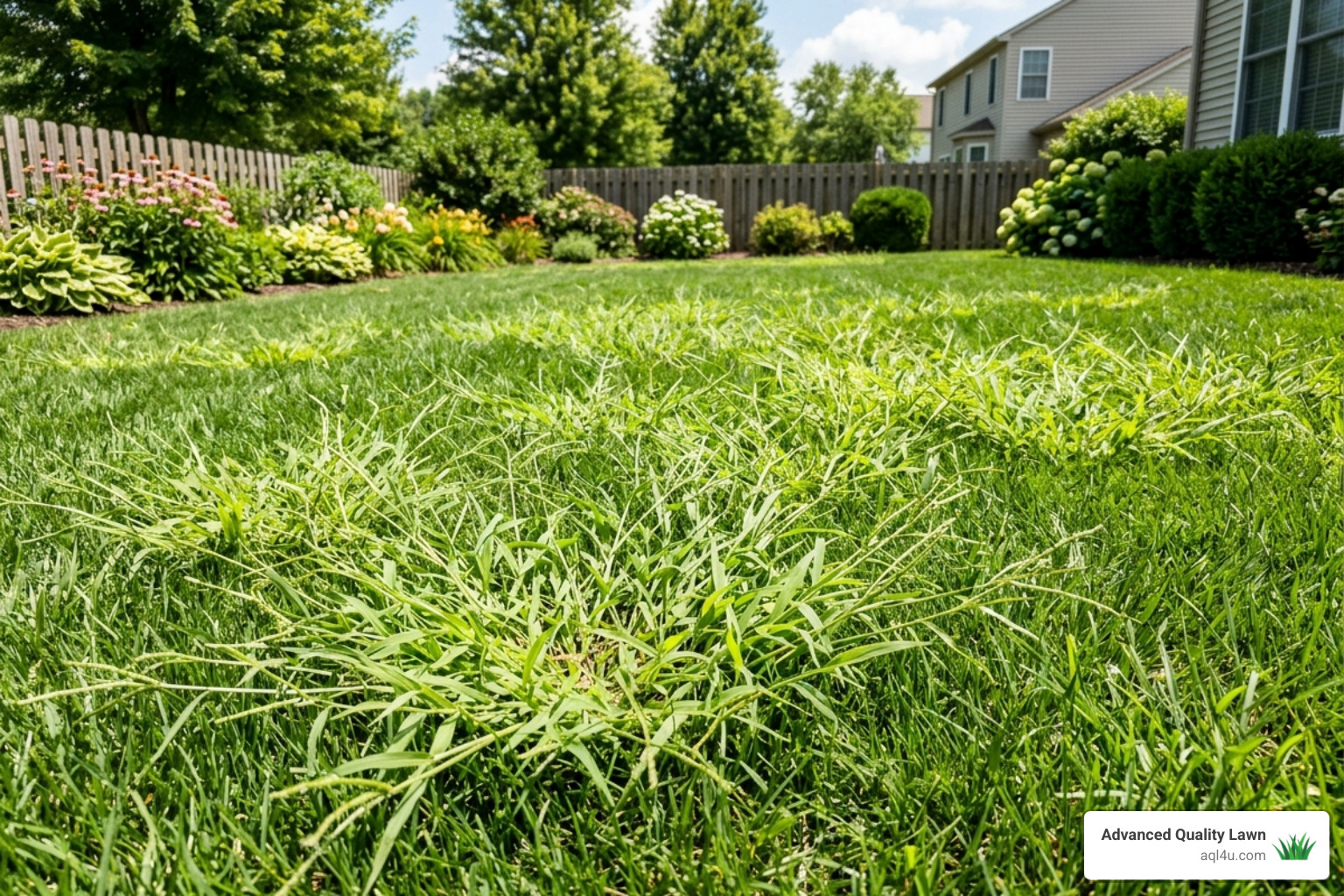
The best way to get rid of crabgrass in summer depends on how bad the infestation is, but here is a quick breakdown:
- Small patches: Hand-pull after watering, removing the entire root crown
- Young plants (2 to 5 leaves): Apply a selective post-emergent herbicide containing Quinclorac or Fenoxaprop-ethyl
- Large or mature plants: Use a Quinclorac-based product with methylated seed oil added for better results
- Heavily infested areas: Spot-treat with a non-selective herbicide like glyphosate, then reseed after a few days
- All situations: Mow at 3 inches or higher to shade soil and slow regrowth
No matter which method you use, act fast. The longer you wait, the more seeds each plant produces.
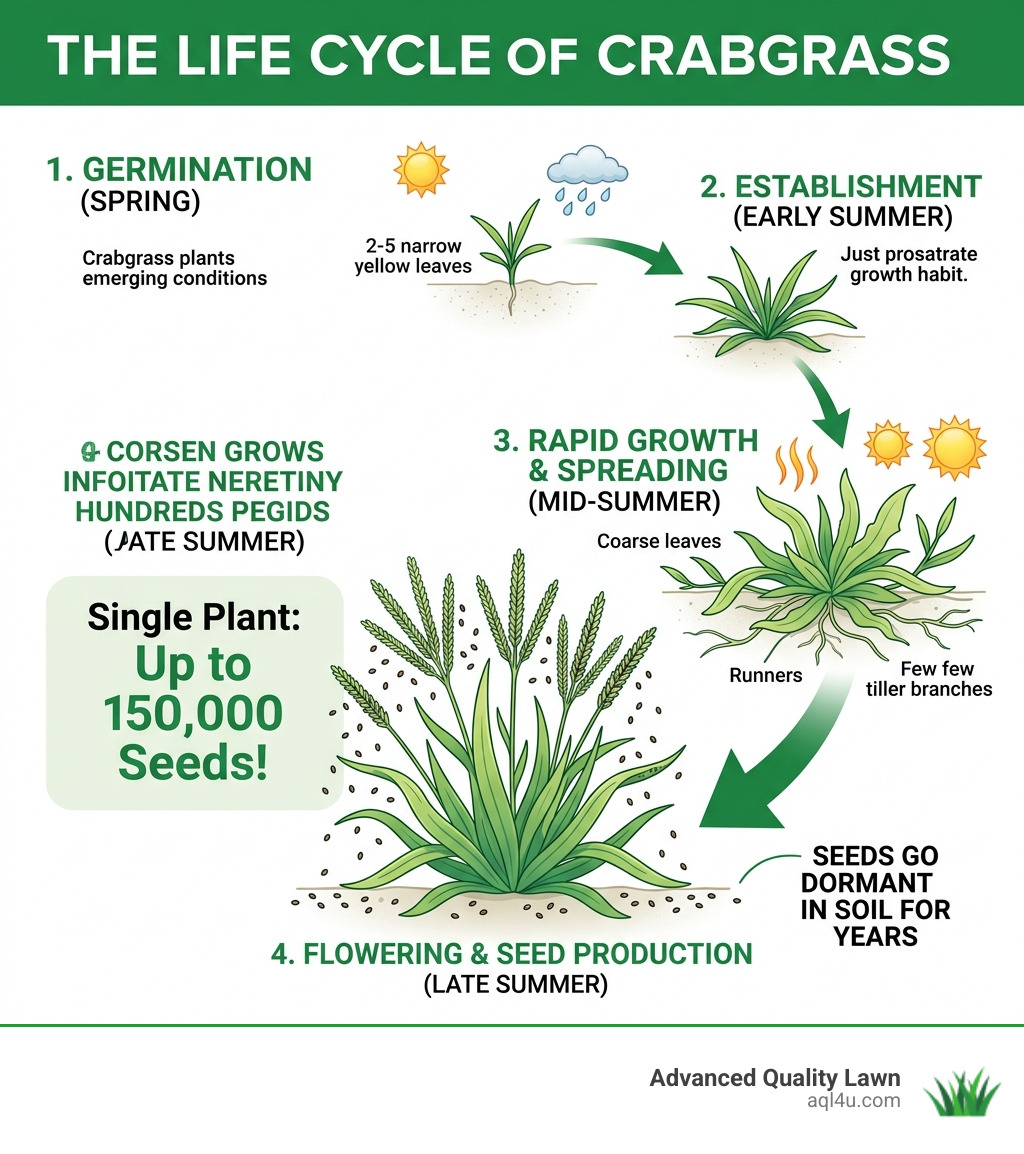
Crabgrass is one of the most frustrating weeds Ohio homeowners deal with every summer. It thrives in exactly the conditions that stress your lawn: heat, bare soil, and compacted ground. And here is the number that should get your attention: a single crabgrass plant can produce up to 150,000 seeds in one growing season. Those seeds can stay viable in the soil for years, waiting for their moment.
By July and August, crabgrass is often already mature and spreading fast. At that point, prevention advice is not helpful. You need to know what actually works right now, in the middle of summer heat.
I'm Andrew Day, owner of Advanced Quality Lawn, and with over 30 years of lawn care experience serving Northeast Ohio, I have seen how quickly a summer crabgrass problem can spiral out of control if the right methods are not used at the right time. In this guide, I will walk you through the best way to get rid of crabgrass in summer, from targeted herbicide options to cultural fixes that protect your lawn long-term.
Identifying Crabgrass in Your Summer Lawn
Before we can tackle the problem, we have to make sure we are actually looking at crabgrass. In Northeast Ohio, we primarily see smooth crabgrass and large crabgrass. Both are annual warm-season grasses. They love the humidity in Akron and the heat in Cleveland during July.
You can spot crabgrass by looking for a few specific visual cues. First, look for a lighter green or chartreuse color that stands out against the darker green of your tall fescue or Kentucky bluegrass. The leaf blades are much wider than typical lawn grass and they often have a coarse texture.
The growth habit is the biggest giveaway. Instead of growing straight up, crabgrass stems sprawl outward from a central root. This looks like the legs of a crab, which is how the weed earned its name. As the plant matures, it forms thick clumps that can smother your desirable grass.
It is easy to confuse crabgrass with other weeds like dallisgrass or quackgrass. However, crabgrass has a membranous ligule and lacks the underground rhizomes that many perennial weeds use to spread. If you want to see how it compares to other common Ohio invaders, you can read more about Dandelions and crabgrass to help differentiate them. For a more technical breakdown, this Crabgrass identification guide from extension experts is a great resource.
The Best Way to Get Rid of Crabgrass in Summer
Once the heat of summer hits and the crabgrass is already visible, pre-emergent treatments will not help. You are now in the post-emergent phase. The best way to get rid of crabgrass in summer involves using selective herbicides that target the weed without killing your grass.
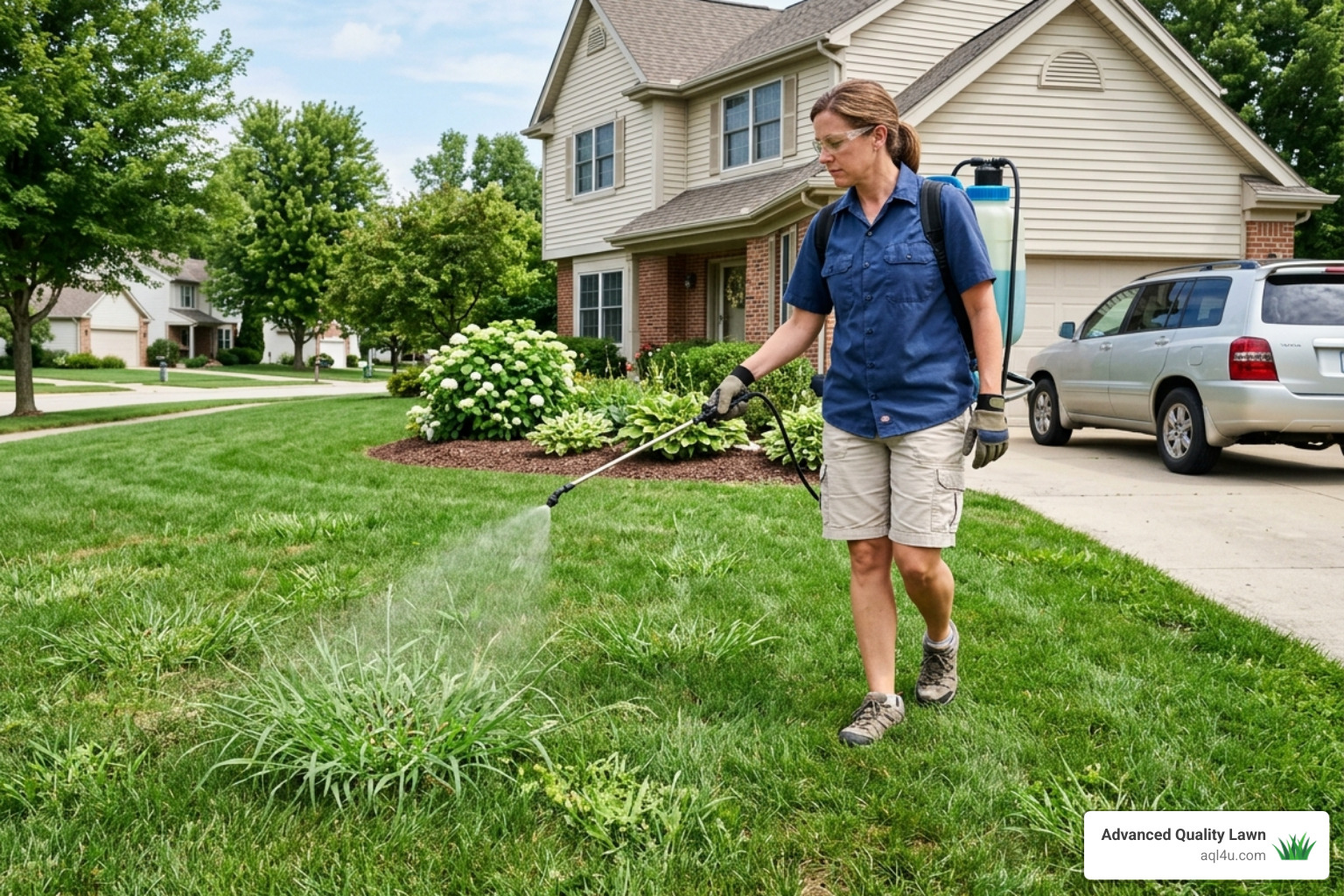
The most effective active ingredients for home lawns are Quinclorac and Fenoxaprop-ethyl. Quinclorac is a favorite because it is very effective on young crabgrass and also controls some broadleaf weeds. Fenoxaprop-ethyl is often better for more mature plants or for controlling goosegrass, which is another common summer nuisance.
When choosing a product, you should look for the Best herbicide for crabgrass that fits your specific grass type. Not all chemicals are safe for every lawn. For example, some products might be safe for tall fescue but could damage fine fescue. Always read the label before you spray. In some cases, you might even use a Dithiopyr post emergent because dithiopyr is unique. It works as both a pre-emergent and a post-emergent for very young crabgrass plants.
Using Post-Emergent Herbicides for Mature Crabgrass
Timing is everything when it comes to herbicides. Crabgrass goes through various growth stages called tillers. A tiller is a shoot that grows from the base of the plant. It is much easier to kill a plant with only one or two leaves than it is to kill a mature plant with five or more tillers.
If you are dealing with mature crabgrass in August, you may need to add a surfactant like methylated seed oil to your spray mix. This helps the herbicide stick to the waxy leaves and penetrate the plant more effectively. You should spray when the weeds are actively growing and not under drought stress. If the soil is bone dry, the crabgrass will go into survival mode and it will not absorb the chemical.
Be careful with the temperature. Most selective herbicides should not be applied when temperatures exceed 85 or 90 degrees Fahrenheit. If you spray during a heatwave, you risk burning your desirable lawn grass. It is often best to wait for a cooler morning or evening to apply your treatment. If you are also fighting other stubborn weeds, you might want to look for the Best weed killer for nutsedge and crabgrass to handle both problems at once.
Non-Selective Options and the Best Way to Get Rid of Crabgrass in Summer
Sometimes the crabgrass has completely won. If you have a patch of lawn that is more weed than grass, selective herbicides might not be worth the cost. In these cases, the best way to get rid of crabgrass in summer is to use a non-selective herbicide like glyphosate.
Glyphosate will kill everything it touches, so you must use it as a spot treatment or for a total lawn renovation. This is often the most cost-effective way to handle massive infestations before you reseed in the fall. After applying glyphosate, the crabgrass will turn brown and die within a few days. You can leave the dead plant material in place to act as a mulch for your new seeds.
The main drawback here is the wait time. You cannot just spray and seed the same hour. Most non-selective products require you to wait at least three to seven days before putting down new grass seed. If you plan to renovate your lawn in late August, this is a viable strategy to clear the slate.
Cultural Practices for Summer Crabgrass Management
While chemicals are helpful, they are not a substitute for good lawn care. Crabgrass is an opportunistic weed. It fills in the gaps where your grass is thin or stressed. By changing how you manage your lawn, you can make it much harder for crabgrass to survive.
The most important cultural practice is your mowing height. We recommend mowing at 3 inches or higher for most Northeast Ohio lawns. Taller grass shades the soil surface. Since crabgrass seeds need sunlight to germinate, a thick canopy of fescue or bluegrass can naturally suppress new weeds. If you scalp your lawn or mow too short, you are basically inviting crabgrass to move in.
Watering is another key factor. You should avoid light, frequent watering. This keeps the soil surface moist, which crabgrass loves. Instead, water deeply and infrequently. Aim for about one inch of water per week. This encourages your grass roots to grow deep into the soil where it stays cooler and wetter, giving your lawn a competitive edge over shallow-rooted weeds. For more on these techniques, check out this guide on How to control crabgrass.
Physical Removal as the Best Way to Get Rid of Crabgrass in Summer
If you only have a few plants scattered around your driveway or garden beds, hand-pulling is often the best way to get rid of crabgrass in summer. It is immediate and does not involve any chemicals.
The trick is to pull when the soil is moist. After a summer rain or a deep watering session, the roots will release much more easily. You need to make sure you extract the entire root crown. If you leave the crown behind, the plant will simply grow back.
You must also act before the seed heads form. Once you see those finger-like spikes at the top of the plant, it is dropping seeds. If you pull a plant that has already gone to seed, you might accidentally shake thousands of new seeds into your soil. If the plant already has seeds, it is better to carefully bag the plant after pulling it. You can find more specific tips in our Category/Crabgrass section.
Natural and Organic Control Methods
If you prefer to avoid synthetic chemicals, there are a few natural ways to kill crabgrass in the summer. One of the simplest methods is using boiling water. If you have crabgrass growing in sidewalk cracks or along a stone path, pouring boiling water directly onto the plant will cook the roots and kill it instantly.
Another option is solarization. This involves covering a heavily infested area with clear plastic for four to six weeks during the hottest part of the summer. The sun heats the soil under the plastic to temperatures that kill both the weeds and the seeds buried in the ground. This is a great way to prep a small area for fall planting without using herbicides.
Some homeowners also use horticultural vinegar. While this can kill the top growth of the weed, it often struggles to kill the entire root system of a mature crabgrass plant. Regardless of the method, keeping your soil healthy is the long-term solution. You can explore more organic ideas in our Category/Crabgrass archive.
Preparing for Fall While Treating Summer Infestations
One of the biggest risks of treating crabgrass in late summer is the impact on your fall seeding plans. In Northeast Ohio, the best time to overseed is from late August through September. Many herbicides have residual effects that will prevent your new grass seeds from germinating.
If you use a strong post-emergent herbicide in August, you might have to wait four weeks or more before it is safe to plant new seed. If you wait too long to seed, the new grass will not have enough time to establish itself before the first frost hits Brecksville or Hudson.
| Herbicide Type | Active Ingredient | Wait Time Before Seeding |
|---|---|---|
| Selective | Quinclorac | 4 Weeks |
| Selective | Fenoxaprop-ethyl | 0 to 4 Weeks (Check Label) |
| Non-Selective | Glyphosate | 3 to 7 Days |
| Pre-Emergent | Prodiamine | 2 to 4 Months |
| Pre-Emergent | Siduron | 0 Days (Safe for Seeding) |
If you are planning a major fall renovation, you should look for the Best pre emergent weed killer for lawns that is compatible with new seedlings. Siduron is one of the few options that allows you to stop weeds while your new grass grows.
Preventing Next Year’s Crabgrass Invasion
The best way to get rid of crabgrass in summer is to make sure it never shows up in the first place. This starts with a pre-emergent application in the spring.
Crabgrass seeds begin to germinate when the soil temperature reaches 55 degrees Fahrenheit for four to five consecutive days. In our area, this usually happens around the time the forsythia bushes are in full bloom. If you miss this window, the seeds will sprout and you will be back to fighting them in July.
Crabgrass seeds can remain viable for up to 30 years. Even if you kill every plant this year, there are likely thousands of seeds waiting in your soil. You must also protect your landscape beds. We often recommend using a Crabgrass preventer in flower beds or a Pre emergent for garden beds to keep your mulch areas clean.
Frequently Asked Questions about Summer Crabgrass
Does mowing crabgrass spread the seeds?
Yes, if the crabgrass has already produced seed heads, mowing will spread those seeds across your lawn. If you see seeds, it is a good idea to use a bagger on your mower to collect the clippings. However, regular mowing before the plant reaches the seed stage can actually help weaken the weed and prevent it from spreading.
Can I kill crabgrass without harming my grass?
Yes, by using selective herbicides like Quinclorac. These chemicals are designed to target the unique biology of weedy grasses while leaving your desirable turfgrass alone. However, you must follow the label carefully. Applying too much or spraying during extreme heat can still stress or damage your lawn.
Why is my crabgrass growing so fast in July?
Crabgrass is a C4 plant, which means it is biologically optimized for hot and dry conditions. While your cool-season fescue slows down and goes dormant in the Ohio summer heat, crabgrass is just getting started. It can grow from a tiny seedling to a mature, seed-producing plant in just a few weeks when temperatures are between 80 and 100 degrees.
Conclusion
Dealing with a summer crabgrass infestation can feel like a losing battle, but with the right approach, you can take your lawn back. Whether you choose to hand-pull small patches or use a professional-grade post-emergent herbicide, the key is to be consistent.
At Advanced Quality Lawn, we understand the unique challenges of maintaining a beautiful yard in Northeast Ohio. From Akron and Cuyahoga Falls to Cleveland and Medina, we provide expert lawn care, tree, and shrub services designed to keep your property healthy year-round. We pride ourselves on excellent customer service, offering service calls and full-program guarantees to ensure you are happy with your results.
We cover over 99 zip codes across Summit, Medina, Cuyahoga, Portage, and several other counties. If you are tired of spending your weekends fighting weeds, let us handle the hard work for you. You can learn more about our professional Lawn care maintenance services and how we can help you achieve a thick, weed-free lawn that stays green all summer long. Don't let the summer heat simmer your lawn. Give us a call and let's get your grass back on track.