
Why Choosing the Best Fertiliser for Kikuyu Matters
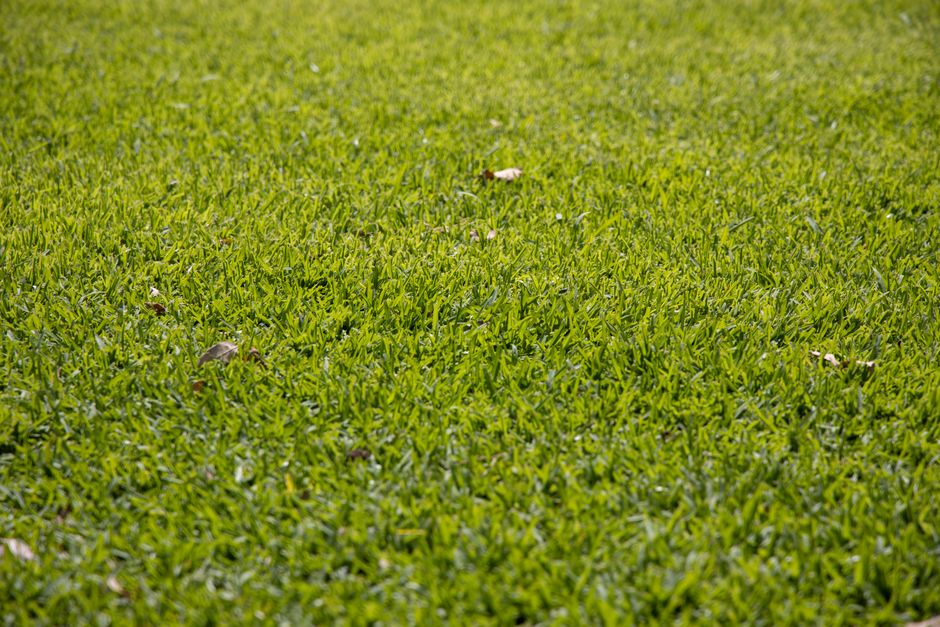
Finding the best fertiliser for Kikuyu grass comes down to a few key facts: Kikuyu is a fast, hungry grower that needs regular nitrogen to stay thick and green, but it also benefits from iron for colour and potassium for root strength.
Quick answer: The best fertiliser for Kikuyu grass
| Goal | Fertiliser Type | Key Nutrients | How Often |
|---|---|---|---|
| Thick, spreading lawn | Slow-release granular | Nitrogen (N), Phosphorus (P) | Every 6-8 weeks in spring/summer |
| Deep green colour | Liquid iron supplement | Iron (Fe), Magnesium (Mg) | Between granular applications |
| Winter resilience | Balanced granular | Potassium (K), Iron (Fe) | Once in early autumn |
| New lawn establishment | Balanced starter | N, P, K | At laying, then 6-8 weeks later |
Kikuyu is one of the toughest, fastest-spreading warm-season grasses you can grow. It repairs itself quickly, handles foot traffic well, and builds serious drought tolerance once it is established. But that aggressive growth comes at a cost: Kikuyu burns through nutrients faster than slower-growing grasses like Buffalo. When it does not get fed consistently, the results are hard to miss. The lawn turns pale, thins out, and starts to feel coarse underfoot.
The good news is that with the right fertiliser program, Kikuyu responds fast. You can see real colour improvement within 7 to 14 days of a quality feeding.
I'm Andrew Day, owner of Advanced Quality Lawn, and with over 30 years of experience helping homeowners build healthier lawns, I have seen how the right feeding program transforms Kikuyu from a scraggly, patchy mess into a dense, vibrant lawn. In this guide, I will walk you through everything you need to know to choose the best fertiliser for Kikuyu and get the most out of every application.
Choosing the Best Fertiliser for Kikuyu Grass
Selecting the best fertiliser for Kikuyu requires an understanding of how this specific grass variety consumes energy. Since it is May 2026, we are right in the window where many homeowners are assessing their lawn health after a busy growing season. Kikuyu is naturally aggressive, spreading via both rhizomes (underground stems) and stolons (above-ground runners). Because it is constantly moving, it has a high metabolic rate.
When you look at different products, you will generally choose between granular and liquid options. Granular fertilisers are excellent for long-term health because they provide a steady "trickle" of nutrients. Liquid fertilisers act like an espresso shot for your grass, providing immediate absorption through the leaves and roots. For more background on these types, you can check out Fertilizer 101: What Is It and When Should You Use It?.

A key consideration for our environment in Northeast Ohio is nutrient management. Scientific data shows that nitrogen leaching from established Kikuyu turfgrass can range from 33 to 68 kg N ha per year. This means that if you apply too much at once, the grass cannot use it all, and it simply washes away. We want to avoid that waste. Additionally, Kikuyu thrives best when the soil pH is kept between 5.5 and 7.0. If your soil is too acidic or alkaline, the grass will struggle to take up the nutrients you are providing.
You might also wonder if Is Organic Fertilizer Better Than Synthetic Fertilizer?. While organic options improve soil structure over time, synthetic slow-release fertilisers often provide the specific high-nitrogen punch that Kikuyu needs to maintain its signature density. Many professional guides, such as the Best Fertiliser for Kikuyu Grass (Thick, Green Lawn Guide) - CompleteGrow, suggest a nitrogen-forward approach for the best results.
Why Nitrogen is the Best Fertiliser for Kikuyu Growth
Nitrogen is the primary fuel for the rapid growth and runner spread that makes Kikuyu so popular. Without enough nitrogen, the grass loses its ability to self-repair. If a dog runs across the lawn or a mower scalp occurs, a nitrogen-starved lawn will stay patchy for weeks. A well-fed lawn, however, will knit back together in days.
For established lawns, we often recommend a 16-4-8 Liquid Fertilizer to give the grass an immediate boost. When using granular products, a good rule of thumb is to aim for about 2 pounds of nitrogen per 1,000 square feet over the course of the growing season. This supports the thick cord-like runners that give Kikuyu its strength.
It is important to remember that more is not always better. Research on nitrogen leaching indicates that the greatest losses occur during the establishment phase. This is why we focus on moderate, frequent applications rather than one heavy "dump" of fertiliser that the soil cannot hold.
Selecting the Best Fertiliser for Kikuyu Colour and Thickness
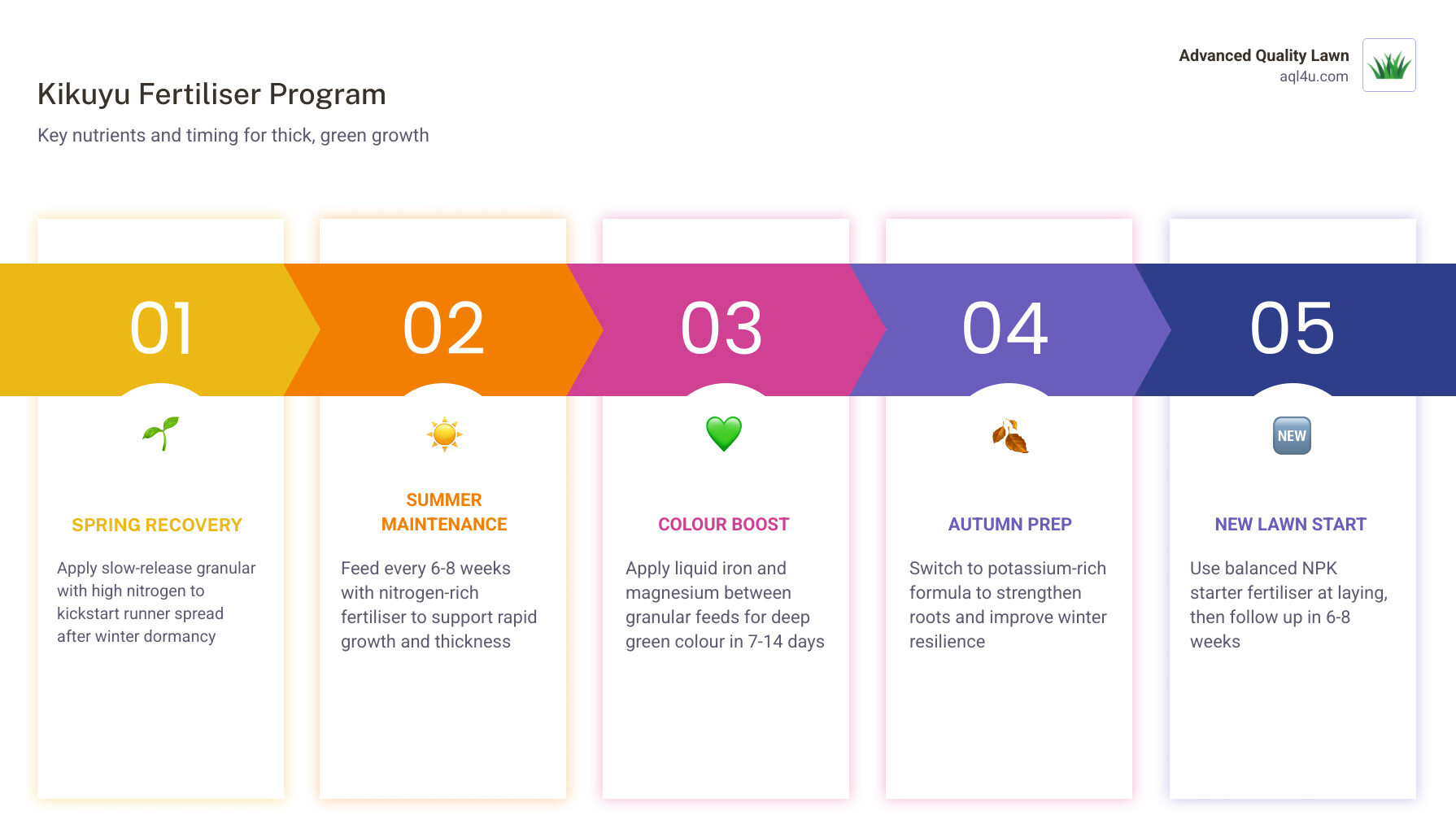
While nitrogen handles the "bulk" of the growth, it is not the only player. If you want that deep, enviable emerald green without causing the grass to grow six inches overnight, you need iron and magnesium. These trace elements are the secret to a vivid lawn.
Using a liquid iron supplement can result in visible colour improvements within 7 to 14 days. This is particularly helpful in the warmer months when high nitrogen could lead to excessive mowing requirements. By balancing your nitrogen with iron, you get a lawn that looks lush and thick but remains manageable. As noted in the Best Fertiliser for Kikuyu Grass (Thick, Green Lawn Guide) - CompleteGrow, this combination is the gold standard for homeowners who want a professional-looking finish.
A Seasonal Guide to Fertilising Kikuyu Grass
Kikuyu is a warm-season grass, meaning its internal clock is governed by temperature. It loves the sun and does its best work when temperatures are between 15 and 25 degrees Celsius (roughly 60 to 77 degrees Fahrenheit). Because of this, your feeding schedule must change with the seasons.
Knowing When to Use Fertilizer is half the battle. Generally, you should aim to fertilise 3 to 4 times per year. During the peak of summer, Kikuyu is very thirsty. Scientific research on Kikuyu water use shows that evapotranspiration (the amount of water the plant uses and loses to the air) can range from 2.8 to 7.5 mm per day. This high water use is directly correlated with growth. If you are fertilising heavily, you must be prepared to water heavily as well.
Spring and Summer Feeding for Maximum Spread
Spring is the time for recovery. After the winter chill, your Kikuyu will be waking up and looking for energy. This is the best time to apply a nitrogen-rich fertiliser to encourage those runners to start spreading again. If you have patchy areas from winter wear, this early boost is essential.
During the active growth phase of summer, we recommend feeding every 6 to 8 weeks. This keeps the nutrient levels stable and prevents the "feast and famine" cycle that can lead to yellowing. If you are dealing with a relatively new lawn, you might want to look into the Best Fertilizer for New Grass to ensure the root system is strong enough to handle the summer heat.
Autumn and Winter Care for Resilience
As the weather cools down in late autumn, the goal shifts from growth to protection. This is when you should switch to a fertiliser higher in potassium. Potassium acts like an immune system booster for your grass, strengthening the cell walls to help it survive the coming frost.
In Northeast Ohio, our winters can be tough on warm-season varieties like Kikuyu. While the grass will naturally go dormant and perhaps turn a bit brown, a healthy application of potassium and iron in the fall helps it bounce back much faster in the spring. For more tips on this transition, refer to our Best Fertilizer New Grass Seed Fall Guide. Remember to stay off the lawn when frost is present to avoid damaging the dormant blades.
Application Methods for Maximum Nutrient Absorption
How you apply the best fertiliser for Kikuyu is just as important as what is in the bag. If you apply it unevenly, you will end up with a "leopard print" lawn of dark green and light yellow patches.
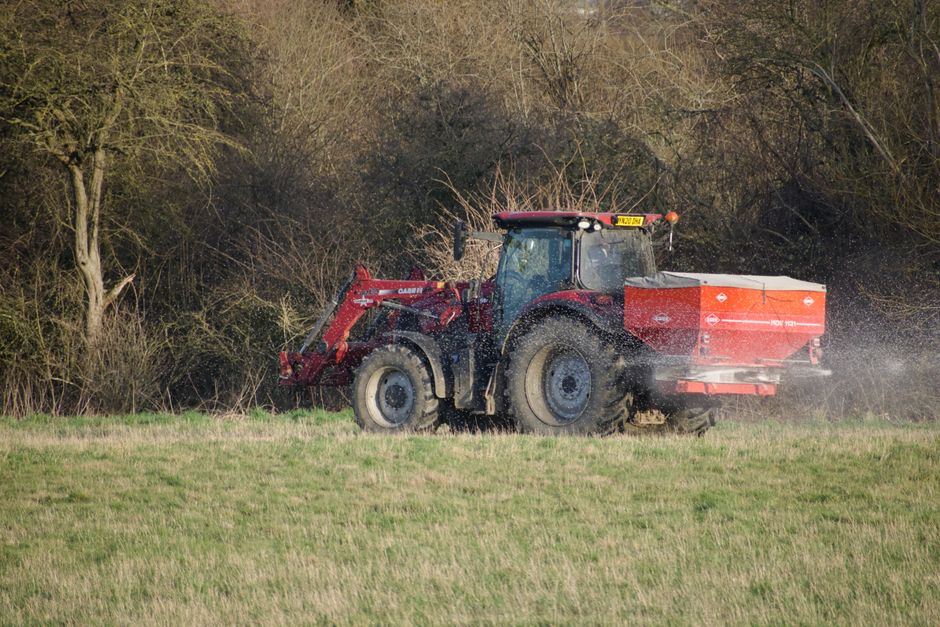
For granular fertilisers, we always recommend using a mechanical spreader. This ensures a consistent rate across the entire yard. For liquid fertilisers, a hose-on bottle is often the easiest method for homeowners. It allows you to walk at a steady pace and soak both the leaves and the soil.
Comparison of Application Methods
| Feature | Granular Fertiliser | Liquid Fertiliser |
|---|---|---|
| Speed of Results | Slower (1-2 weeks) | Fast (3-7 days) |
| Longevity | Long-lasting (up to 2 months) | Short-term (2-4 weeks) |
| Ease of Use | Requires spreader | Requires hose attachment |
| Best For | Base nutrition and root health | Quick green-up and recovery |
After applying granular fertiliser, it is vital to water it in immediately. This moves the nutrients off the grass blades and down into the soil where the roots can reach them. If left on the blades, the nitrogen can actually "burn" the grass, leaving brown marks.
Your mowing habits also play a role in how well the fertiliser works. We suggest keeping Kikuyu at a height of 20 to 25mm for a manicured look. During the peak of summer, you may need to mow every 7 to 10 days to keep up with the growth. For a deeper dive into the mechanics of feeding, see How to Fertilize Your Lawn.
Frequently Asked Questions about Kikuyu Care
Why is my Kikuyu grass turning yellow?
Yellowing is almost always a cry for help. The most common cause is a nitrogen or iron deficiency. If the soil is compacted, the roots cannot breathe or take up nutrients, which also leads to a pale appearance. In these cases, aeration followed by a high-quality feeding is the best cure. You can find more solutions at Best Fertilizer for Lawn.
Does Kikuyu need more fertiliser than Buffalo or Couch?
Yes, generally it does. Because Kikuyu is such a fast-spreading and aggressive grower, it consumes its "fuel" much faster than Buffalo. While Buffalo is more of a slow-and-steady grower, Kikuyu is a sprinter. This means you need to be more diligent with your feeding schedule. As the Kikuyu Turf | Your Guide | myhomeTURF points out, this grass is a high-performance plant that requires high-performance care.
How often should I fertilise my Kikuyu lawn?
During the active growing season (spring and summer), aim for every 4 to 6 weeks if using liquids, or every 8 weeks if using slow-release granules. Always check the weather first. You want to avoid fertilising right before a massive rainstorm that might wash the nutrients away, but you do want enough moisture to help the grass absorb the food. See When to Use Fertilizer for more timing tips.
Conclusion
Taking care of a Kikuyu lawn is a rewarding process. There is nothing quite like the feeling of a thick, soft, green carpet under your feet on a warm afternoon. By choosing the best fertiliser for Kikuyu and following a consistent seasonal schedule, you can ensure your lawn remains the pride of the neighborhood.
At Advanced Quality Lawn, we understand that every yard in Akron and the surrounding Northeast Ohio area has unique needs. Whether you are in Hudson, Solon, or Medina, we are here to help. We provide expert lawn care, tree, and shrub services with a focus on excellent customer service. Our full-program guarantees and dedicated service calls mean you never have to worry about the health of your turf.
If you are ready to take your lawn to the next level but do not want to handle the spreaders and chemicals yourself, give us a call. We cover 99 plus zip codes across Summit, Cuyahoga, and Medina counties, and we would love to help you achieve that maximum spread. For more information on our professional services, visit our page on lawn care maintenance.