
Crabgrass vs. Nutgrass: How to Identify These Tough Lawn Invaders
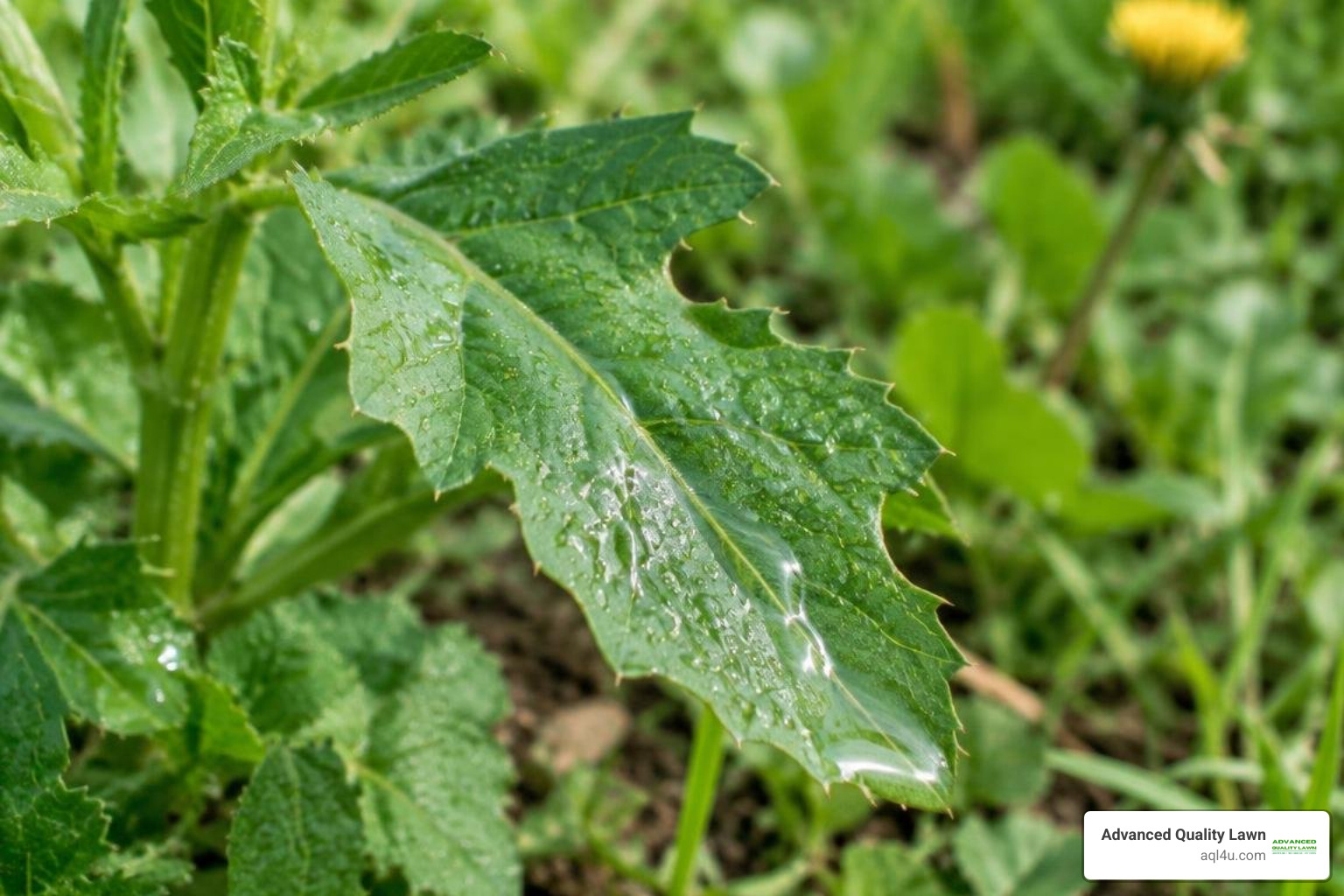
Eliminating both crabgrass and nutgrass simultaneously requires applying a selective post-emergent herbicide that combines Quinclorac and Sulfentrazone. Quinclorac targets the grassy weed crabgrass, while Sulfentrazone controls the sedge weed nutgrass, also called yellow nutsedge. Once you have identified which invader is present, you can choose the right product and timing for effective control.
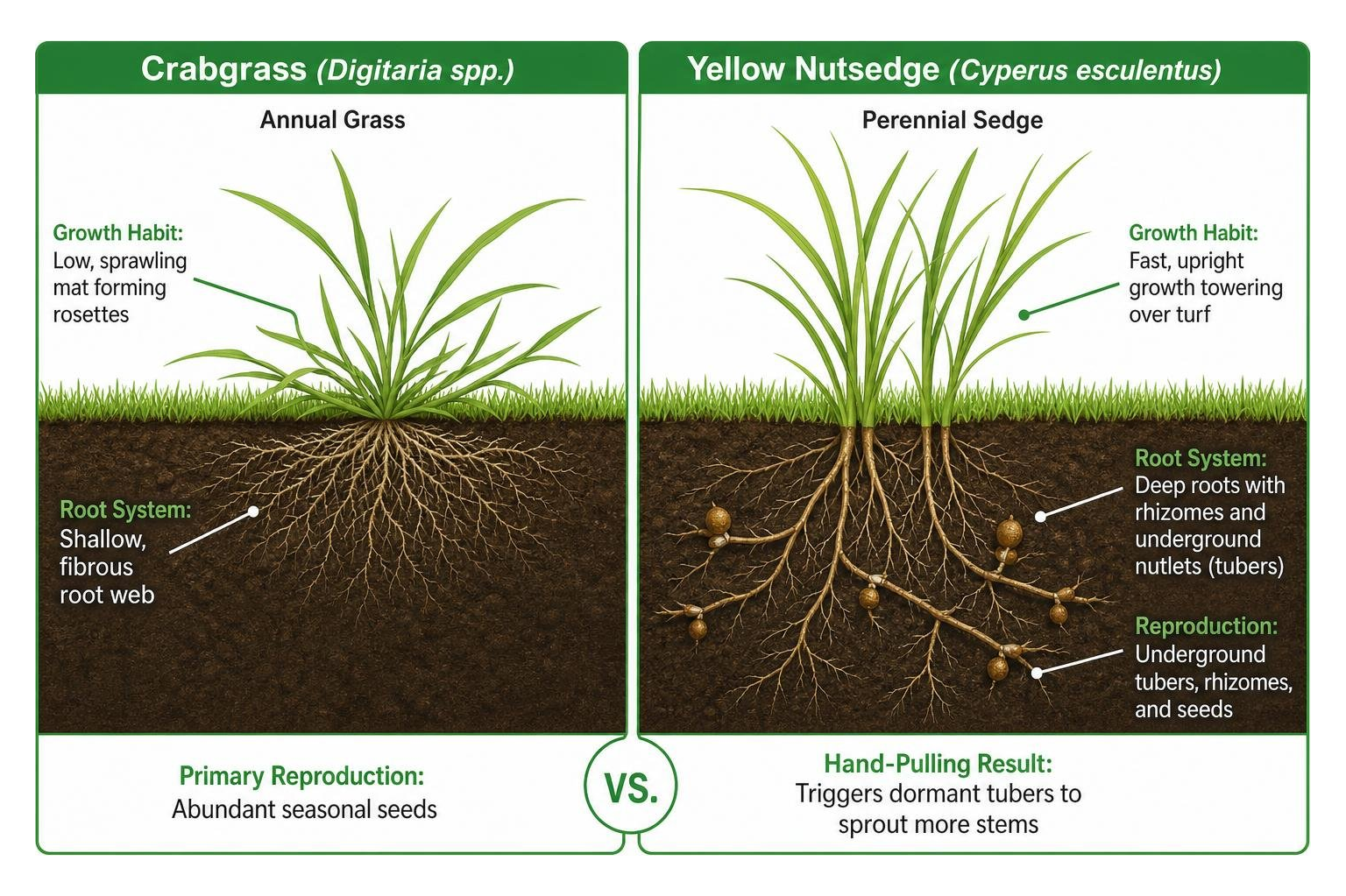
Telling these two weeds apart is the first step toward clearing your yard. Crabgrass (Digitaria species) is an opportunistic annual grass that germinates in early spring as soil temperatures warm up. It grows in sprawling, crab-like clusters with flat leaf blades and fibrous roots. Because it is a true grass, it blends into lawns initially until it crowds out your turfgrass.
Nutgrass, scientifically known as yellow nutsedge (Cyperus esculentus), is not a grass at all. It is a perennial sedge with distinct triangular stems that feel sharp and solid when rolled between your fingers. Nutsedge features glossy, yellowish-green leaves with a prominent mid-vein and grows noticeably faster than surrounding turfgrass during hot summer weeks.
The primary reason these invaders cause frustration comes down to their root biology and reproductive habits. Crabgrass spreads through prolific seed production, producing up to 150,000 seeds per plant in a single season. Nutsedge spreads through extensive underground root systems containing rhizomes and nutlets, also called tubers.
| Feature | Crabgrass (Digitaria spp.) | Nutgrass / Yellow Nutsedge (Cyperus esculentus) |
|---|---|---|
| Plant Classification | Annual Grass | Perennial Sedge |
| Stem Shape | Flat, round, branching outward | Triangular, solid, upright |
| Leaf Texture & Color | Light green, dull, coarse, wide blades | Bright yellow-green, shiny, waxy sheen |
| Root System | Shallow, fibrous root web | Deep roots with rhizomes and underground nutlets |
| Primary Reproduction | Abundant seasonal seeds | Underground tubers, rhizomes, and seeds |
| Growth Habit | Low, sprawling mat forming rosettes | Fast, upright growth towering over turf |
| Hand-Pulling Result | Effective if pulled before setting seed | Triggers dormant tubers to sprout more stems |
Pulling nutsedge by hand often makes your infestation worse. When you tug a sedge plant out of the ground, the connecting rhizome snaps, leaving the underground tubers intact. The severed root sends a survival signal to dormant nutlets, causing multiple new shoots to emerge in place of the single stem you removed. For complete eradication tips, our crabgrass control guide explains how integrated management stops weed reproduction cycles across our Northeast Ohio region.
Choosing the Best Crabgrass and Nutgrass Killer: Active Ingredients Explained
Because crabgrass is a true grass and nutsedge is a sedge, standard single-ingredient weed sprays rarely control both at the same time. Selective post-emergent herbicides solve this challenge by combining specific chemical classes that target weed enzyme systems while leaving turfgrass unharmed.
When you spray a selective post-emergent herbicide, the active ingredients enter through the weed leaves and move systemically into the root zone. Choosing the best weed killer for nutsedge and crabgrass means looking for combined active ingredients that handle both species simultaneously, along with common broadleaf weeds like dandelions, clover, and chickweed. Selecting a balanced broadleaf and crabgrass herbicide allows you to clean up multiple weed varieties in one pass while following federal EPA label guidelines.
Quinclorac and Sulfentrazone for Dual Control
The most effective multi-weed formulas pair Quinclorac with Sulfentrazone. Quinclorac functions as a synthetic auxin herbicide. It causes susceptible grassy weeds like crabgrass and foxtail to absorb an overload of plant growth hormones, which halts protein synthesis and causes the weed roots to decline.
Sulfentrazone is a protox (PPO) inhibitor that targets yellow nutsedge and broadleaf invaders. It blocks a critical plant enzyme, generating rapid cell membrane disruption in the presence of sunlight. Sulfentrazone delivers fast visual contact knockdown on sedge foliage, while Quinclorac provides systemic elimination of crabgrass root crowns.
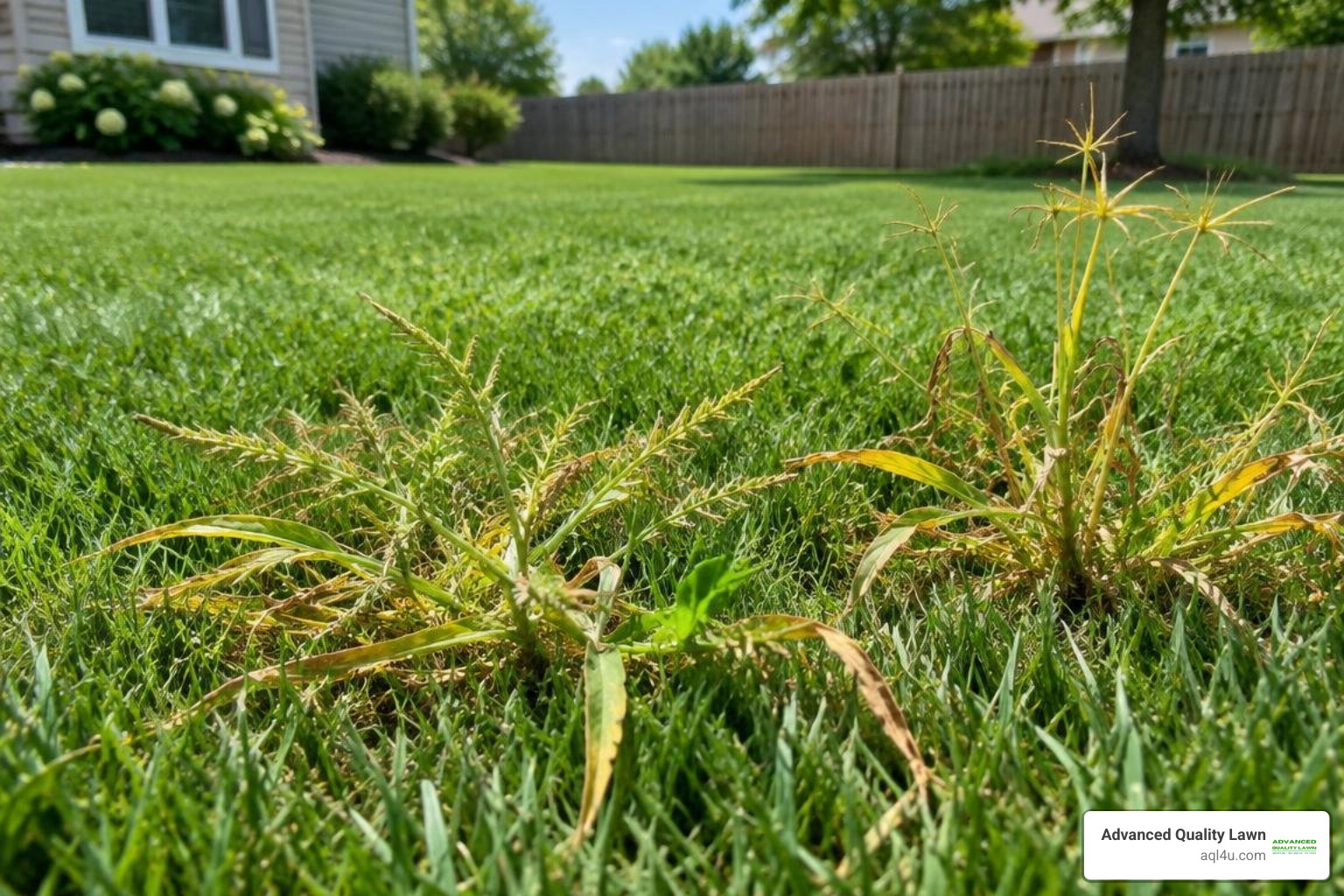
Standard commercial products combining these agents provide dual-action control. When reviewing weed control label specifications, you will notice that this combination targets both foliar sedge tissue and dense annual grass crowns within days of application.
Auxiliary Active Ingredients: 2,4-D, Dicamba, and Topramezone
To expand weed control across broadleaf species, manufacturers regularly add auxiliary compounds:
- 2,4-D: A proven systemic growth regulator that eliminates broadleaf weeds like plantain, dandelion, and henbit without stressing established turfgrass.
- Dicamba: A benzoic acid herbicide that translocates through both roots and leaves to disrupt cell division in hard-to-kill perennial weeds.
- Topramezone: An HPPD-inhibitor that blocks carotenoid biosynthesis. Weeds exposed to topramezone lose their protective green pigments, turning bright white within 4 to 7 days before starving completely.
Mixing multiple active ingredients with distinct modes of action reduces the chance of weeds developing chemical resistance over time. Reviewing the product herbicide technical data sheet helps confirm the exact mixture percentages for your application needs.
Turfgrass Safety: Matching Your Lawn Type with Herbicide Formulations
A herbicide is only as good as its turf safety profile. Applying the wrong product can cause severe turfgrass phytotoxicity, browning, or lawn death. Cool-season grasses like Kentucky bluegrass, tall fescue, and perennial ryegrass handle Quinclorac and Sulfentrazone well, while certain warm-season varieties require extra caution.
Finding the best crabgrass killer that won't kill grass depends on checking your specific turf variety against the product label instructions.
| Turfgrass Variety | Lawn Category | Quinclorac Safety | Sulfentrazone Safety | Topramezone Safety | Application Notes |
|---|---|---|---|---|---|
| Kentucky Bluegrass | Cool-Season | Safe | Safe | Safe | Excellent tolerance when applied at label rates |
| Tall Fescue | Cool-Season | Safe | Safe | Safe | Highly tolerant under moderate temperatures |
| Perennial Ryegrass | Cool-Season | Safe | Safe | Safe | Tolerant, avoid application during drought |
| Bermudagrass | Warm-Season | Safe | Safe | Prohibited | Temporary yellowing can occur above 90°F |
| Zoysiagrass | Warm-Season | Safe | Safe | Prohibited | Highly tolerant to sedge formulations |
| St. Augustinegrass | Warm-Season | Prohibited | Caution | Prohibited | High risk of turf injury, check cultivar safety |
| Bahiagrass | Warm-Season | Prohibited | Prohibited | Prohibited | Do not apply multi-action weed killers |
Warm-season lawns like Bermudagrass may experience temporary yellowing after treatment, especially during hot spells, but healthy grass recovers within two weeks. Never apply products containing Quinclorac or Topramezone to sensitive species such as St. Augustinegrass, Bahiagrass, or Centipedegrass unless the formulation explicitly lists that species on its safety label.
How to Apply a Crabgrass and Nutgrass Killer for Maximum Effectiveness
Proper spraying technique ensures you eliminate invasive weeds without damaging your lawn. The best application window is when crabgrass is in its young growth stage, between two and six leaves, and nutsedge is actively shooting up at three to six inches tall.
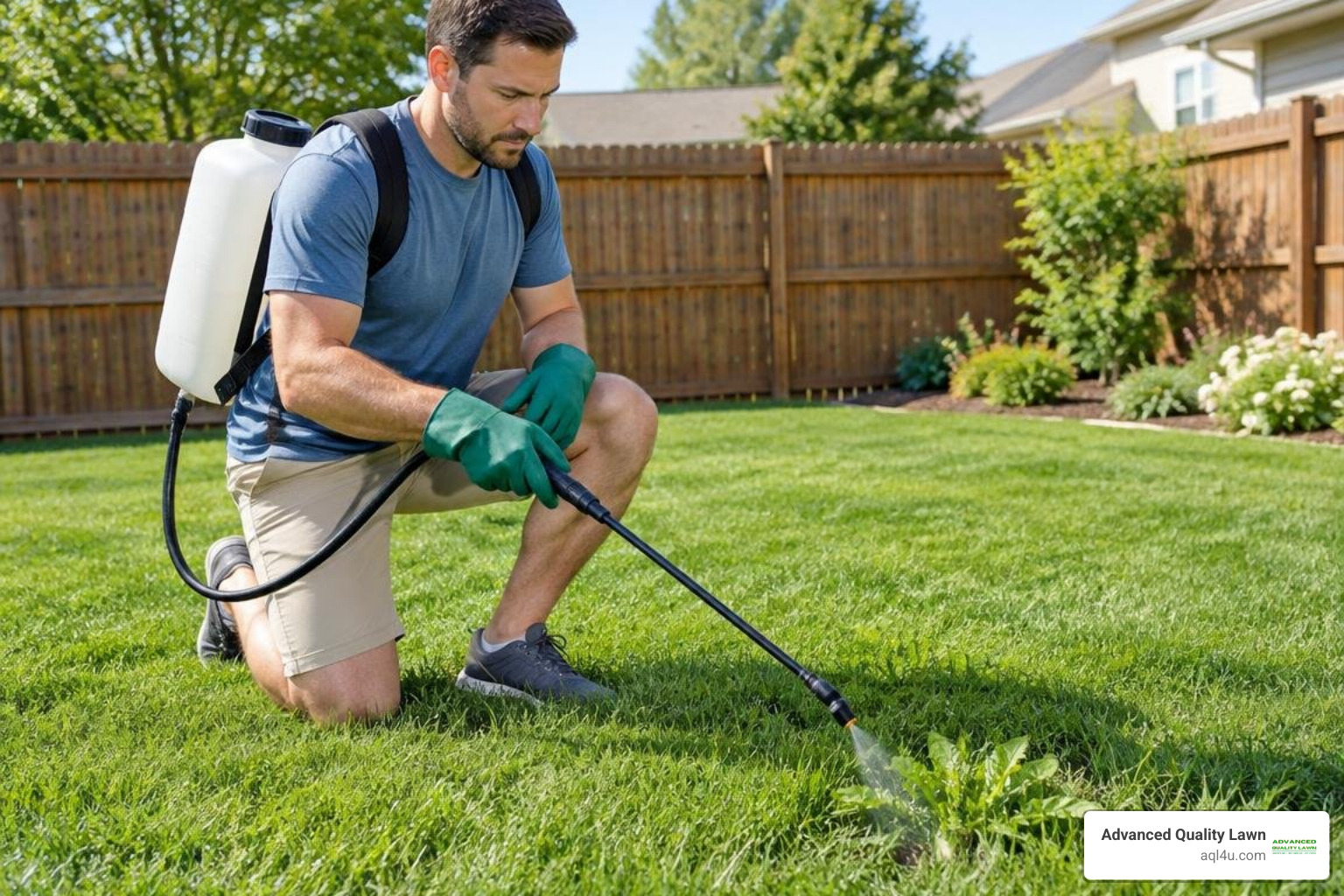
Always monitor current and forecasted weather before treating your lawn:
- Temperature Limits: Apply when daytime temperatures are between 45°F and 90°F. Never spray when temperatures exceed 90°F, as high heat causes chemical stress and scorches desirable grass blades.
- Soil Moisture: Avoid treating drought-stressed turf. Water your lawn thoroughly 24 hours before application to ensure the weeds are hydrated and actively moving sap through their stems.
- Rainfast Window: Quality liquid formulas are rainproof in one hour, but allowing a full 24-hour dry window gives the active ingredients the best chance to absorb into the root systems.
- Mowing Schedule: Do not mow your lawn for two days prior to spraying, which leaves ample weed foliage to catch the mist. Wait another two days after spraying before mowing again so the active ingredients have time to move down into the root system.
Choosing the best lawn spray for crabgrass and sedges gives you precise control over weed patches across your property.
Comparing Formulations: Ready-to-Use vs. Hose-End vs. Concentrates
Weed killers come in three primary packaging types, each suited to different yard sizes and application needs.
| Formulation Type | Ideal Yard Size | Ease of Use | Cost per Square Foot | Best Application Scenario |
|---|---|---|---|---|
| Ready-to-Use (RTU) Sprayer | Under 1,000 sq ft | Highest | High | Spot-treating isolated nutsedge shoots or stray crabgrass rosettes |
| Hose-End Attachment | 1,000 to 5,000 sq ft | High | Moderate | Quick broadcast coverage over medium residential lawns |
| Liquid Concentrate | Over 5,000 sq ft | Moderate | Lowest | Custom tank mixing in pump sprayers for large properties and acreage |
Ready-to-use bottles with battery-powered continuous spray wands provide pinpoint accuracy that prevents overspray onto garden beds. Liquid concentrates require careful measuring in a dedicated tank sprayer, but they offer the most economical option for treating broad areas.
Re-Entry Safety and Environmental Precautions
Safe herbicide handling protects your household, pets, and the local ecosystem:
- Re-Entry Window: Keep children and pets off treated areas until the spray has completely dried, which usually takes two to four hours depending on humidity.
- Drift Management: Spray during calm mornings when wind speeds remain under five miles per hour. Use coarse droplet nozzle settings to keep fine mist from drifting onto desirable perennials, shrubs, or vegetable patches.
- Runoff Protection: Never spray herbicide onto driveways, sidewalks, or curbs where rain can wash chemicals into local storm sewers.
- Personal Protective Equipment: Always wear safety glasses, chemical-resistant gloves, long sleeves, pants, and closed-toe shoes when mixing or applying liquid weed killers. Wash your hands thoroughly with soap and water after completing treatment.
Long-Term Prevention: Keeping Grassy Weeds Out of Your Lawn
Eliminating existing weeds is only half the battle. Preventing weed seeds and tubers from returning requires consistent turf management practices that build thick, resilient turf.
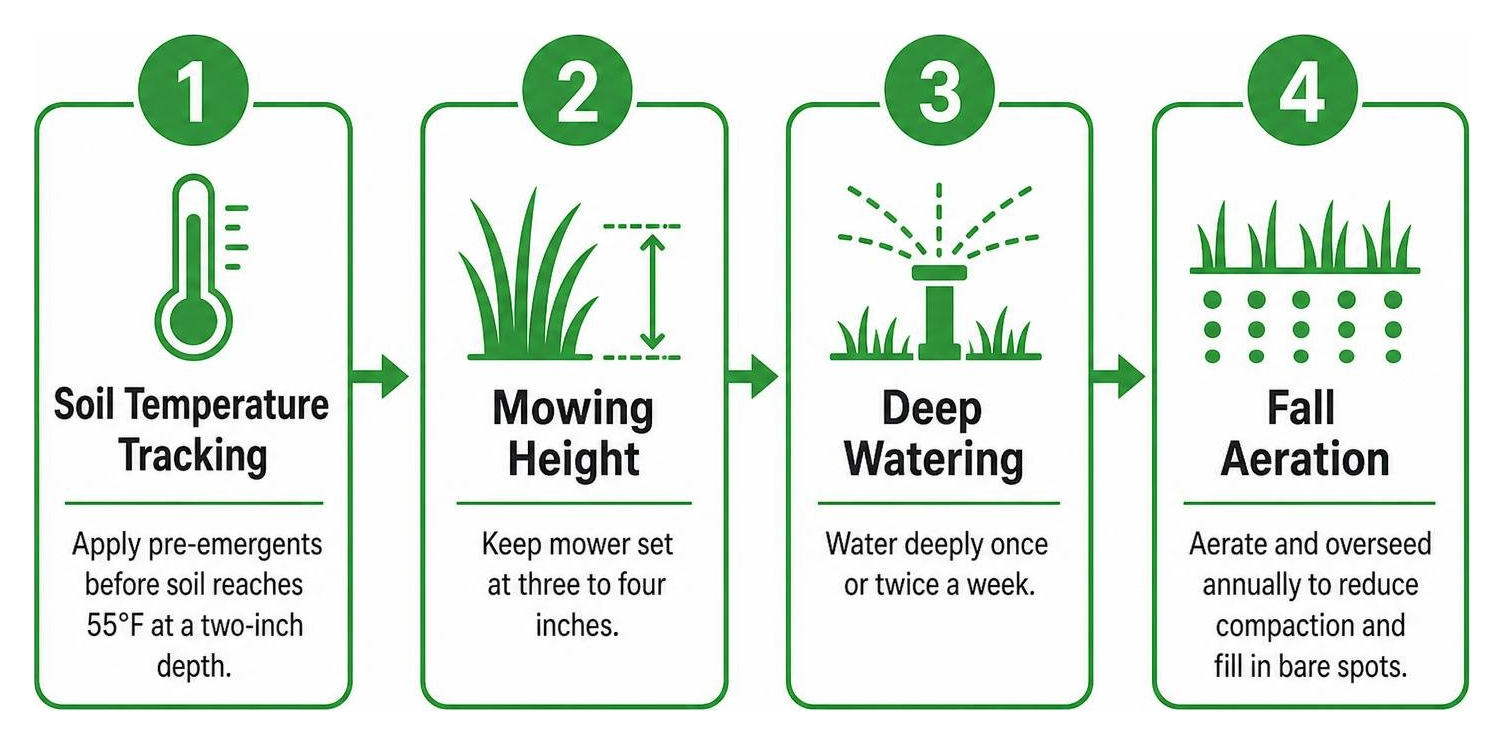
- Apply Spring Pre-Emergents: Apply the best pre-emergent weed killer for lawns in early spring before soil temperatures reach 55°F at a two-inch depth. This creates a chemical barrier that stops crabgrass seeds from sprouting.
- Mow at Higher Settings: Keep your mower deck set at three to four inches for cool-season grasses. Taller turfgrass shades the soil surface, cooling the ground and blocking the sunlight crabgrass seeds and nutsedge tubers need to emerge.
- Water Deeply and Infrequently: Light, daily sprinkling keeps the upper soil damp, creating ideal conditions for weed germination. Water deeply once or twice a week to encourage deep, drought-resistant grass roots while keeping the top layer of soil dry.
- Aerate and Overseed Annually: Compacted soil often leads to weed problems because nutsedge thrives in wet, heavy clay. Core aeration loosens dense soil, while fall overseeding fills in bare patches before weeds can gain a foothold.
Following a seasonal weed and feed program guide supplies essential nutrients that strengthen turfgrass against weed competition all year.
Frequently Asked Questions About Grassy Weed Control
How Long Does It Take for a Crabgrass and Nutgrass Killer to Work?
Visual responses start within hours depending on the active ingredients used. Sulfentrazone shows visible contact burn and wilting on nutsedge foliage in as fast as 5 hours. Systemic products like Topramezone cause target weeds to turn white within 4 to 7 days. Complete root death and breakdown takes 14 to 28 days for mature weeds.
Can I Apply a Crabgrass and Nutgrass Killer in High Summer Heat?
Do not apply selective herbicides when outdoor temperatures exceed 90°F. High heat forces cool-season grasses into temporary dormancy, and applying chemicals during these conditions can cause severe yellowing or turfgrass burn. In hot weather, schedule your spraying for early morning hours when temperatures are cool and the grass is stress-free.
When Should I Do a Second Application for Tough Weeds?
A single herbicide application knocks back visible foliage, but mature yellow nutsedge and well-rooted crabgrass often require a follow-up treatment. Wait at least 14 to 21 days before applying a second spot treatment. Never exceed two broadcast applications per calendar year to prevent soil buildup and keep within label safety limits.
Conclusion
Controlling aggressive lawn invaders like crabgrass and yellow nutsedge requires proper weed identification, the right active ingredients, and consistent lawn care. Using a selective herbicide with Quinclorac and Sulfentrazone gives you reliable control over both annual grasses and perennial sedges without harming your lawn. Combine targeted treatments with seasonal pre-emergents, higher mowing habits, and annual aeration to keep your yard thick, healthy, and weed-free.
If you want professional support for your yard, our team at Advanced Quality Lawn provides comprehensive lawn care and maintenance services across Northeast Ohio. We back our full programs with complete service guarantees, helping you enjoy a healthy lawn season after season.