
Is a 5 in 1 Lawn Fertilizer Right for Your Yard?

A 5 in 1 lawn fertilizer feeds your grass, kills existing broadleaf weeds and crabgrass, and helps prevent new weeds and crabgrass. Before you buy, check that the product is approved for your grass type and location. Follow its label for timing and application rate.
I'm Andrew Day, owner of Advanced Quality Lawn in Northeast Ohio. My team draws on more than 30 years of lawn care experience to help homeowners decide when a 5 in 1 lawn fertilizer fits their yard and when another treatment makes more sense.
Understanding 5 in 1 Lawn Fertilizer and How It Works
Caring for a lawn often feels like a balancing act with multiple bags of product, confusing schedules, and expensive equipment. An all-in-one product simplifies this routine by combining essential turf nutrition with potent weed management tools in a single granular formula.
At its core, a typical 5 in 1 blend features a 22-0-4 NPK ratio. This means the mixture provides 22 percent nitrogen, 0 percent phosphorus to protect local waterways, and 4 percent potassium to bolster turf endurance. Understanding the science behind modern agricultural fertilizer helps show how high-nitrogen blends support steady plant energy. The nitrogen component includes slow-release granules that supply consistent color for up to three months without producing sudden, excessive growth spurts.
The formulation also includes Micro-Feed Action, which enhances root absorption and nutrient utilization within the soil. This balanced delivery helps roots dig deeper into the earth, improving overall drought resistance and grass thickness.
What Makes a 5 in 1 Lawn Fertilizer Different from Standard Weed and Feeds?
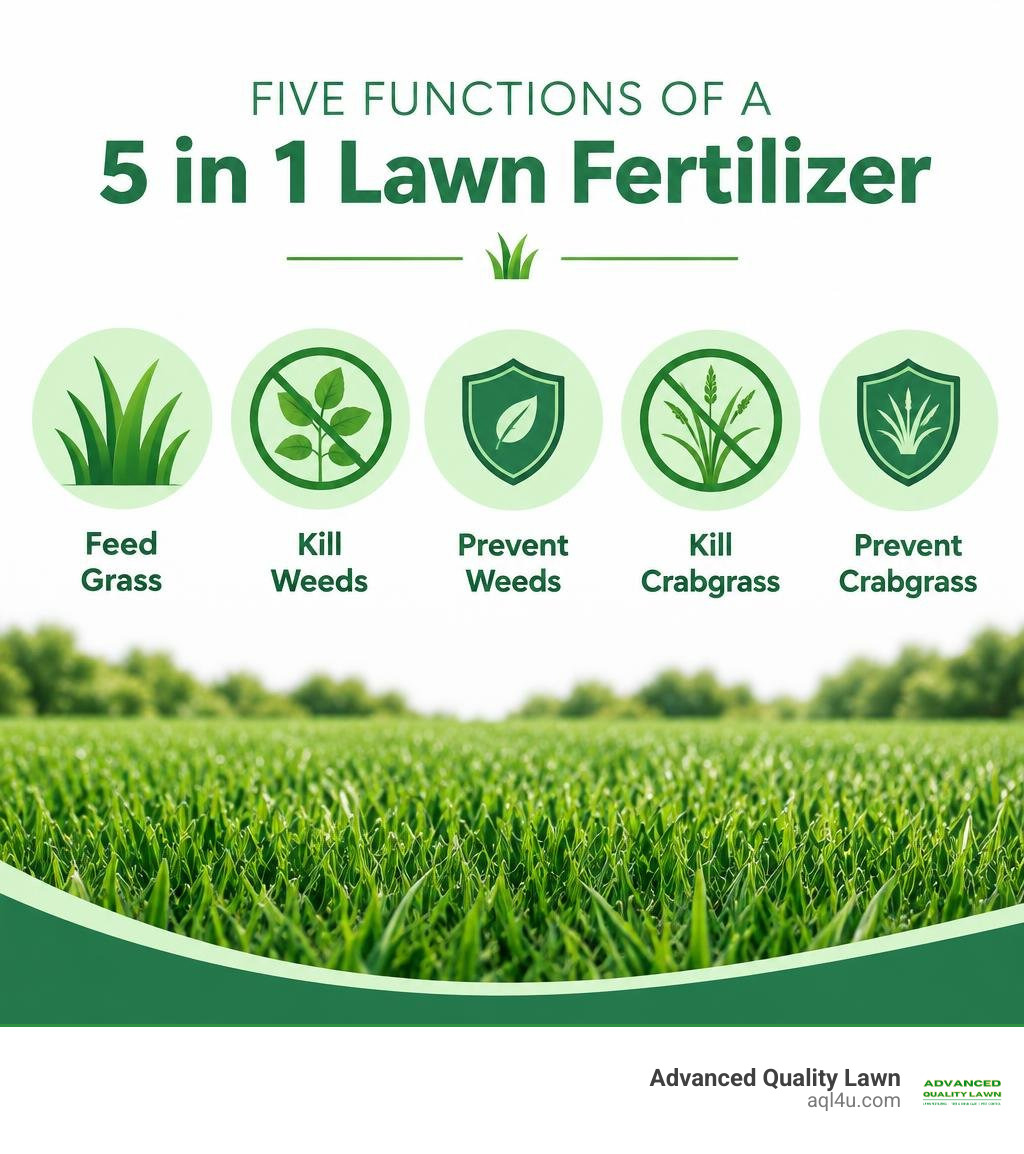
Standard weed-and-feed products often tackle only post-emergent broadleaf weeds while delivering a quick burst of fertilizer. In contrast, an advanced 5-action mixture handles five separate maintenance tasks at once:
- Feeds the turf for up to three months.
- Kills established broadleaf weeds.
- Establishes a pre-emergent barrier against new broadleaf weeds for up to six months.
- Kills actively growing crabgrass.
- Prevents new crabgrass seeds from germinating for up to six months.
To accomplish this wide range of protection, the product contains four active herbicides:
- 2,4-D (0.818%): Targets common broadleaf invaders like dandelions and plantain.
- Quinclorac (0.419%): Delivers post-emergent control of crabgrass and stubborn weeds.
- Dicamba (0.073%): Works systematically to eliminate deep-rooted perennial weeds like clover.
- Dithiopyr (0.240%): Provides both pre-emergent and early post-emergent crabgrass control while preventing broadleaf germination.
Reviewing comprehensive weed and feed strategies reveals that combining pre-emergent and post-emergent chemistry saves both time and labor. While comparing multi-action weed and feed alternatives, having true six-month residual protection sets these advanced options apart from traditional alternatives.
Key Benefits of Using a 5 in 1 Lawn Fertilizer
The primary advantage of this product is its extensive coverage. A single pass targets over 200 species of broadleaf weeds, including chickweed, henbit, and wild violet. At the same time, it creates a robust chemical barrier in the upper soil layer that blocks weed seed germination for up to six months.
Following the core principles of balanced lawn nutrition helps you sustain turf vitality while cutting down on product purchases. When treating crabgrass, a distinct purple discoloration appears on weed leaves within three days. This natural reaction confirms that the herbicide blend has penetrated the plant tissue and begun breaking down the weed from leaf to root.
Grass Compatibility and Regional Restrictions
Not every lawn variety handles active herbicide blends well. Cool-season turf species across Northeast Ohio thrive with this product, but certain sensitive southern grasses can suffer severe root damage or leaf burn.
| Grass / Turf Variety | Compatibility Status | Maximum Temperature Limit | Notes and Application Guidance |
|---|---|---|---|
| Kentucky Bluegrass | Fully Tolerant | Up to 90°F | Ideal for northern lawns. Apply during active growth. |
| Tall & Fine Fescue | Fully Tolerant | Up to 90°F | Excellent stability. Damp foliage helps granule adhesion. |
| Perennial Ryegrass | Fully Tolerant | Up to 90°F | Safe for established stands. Wait 4 weeks to overseed. |
| Bermudagrass | Tolerant with Care | Up to 85°F | Temporary yellowing may occur. Avoid high heat. |
| Zoysiagrass | Fully Tolerant | Up to 90°F | Apply during vigorous spring or summer growth phases. |
| Buffalograss | Fully Tolerant | Up to 90°F | Apply when weeds are small and actively developing. |
| Seashore Paspalum | Fully Tolerant | Up to 90°F | Ensure adequate soil moisture before application. |
| St. Augustinegrass | Prohibited | Do Not Apply | Causes severe injury or turf death. |
| Bahiagrass & Centipede | Prohibited | Do Not Apply | Highly sensitive to active herbicide ingredients. |
State regulations also restrict where this product can be distributed. It is not approved for sale or use in Florida, Hawaii, New York, or Puerto Rico due to specific regional environmental guidelines.
Seasonal Application Timing and Step-by-Step Instructions
Proper timing is crucial when working with combination products. Granules must be spread when weeds are actively photosynthesizing and air temperatures sit consistently between 50°F and 90°F.
Understanding spring lawn fertilization timing helps you knock down spring weeds before summer heat sets in. For northern lawns, a second application during late-season fall feeding provides pre-emergent protection against winter annuals while delivering potassium for winter hardiness.
Follow these practical steps for a smooth application:
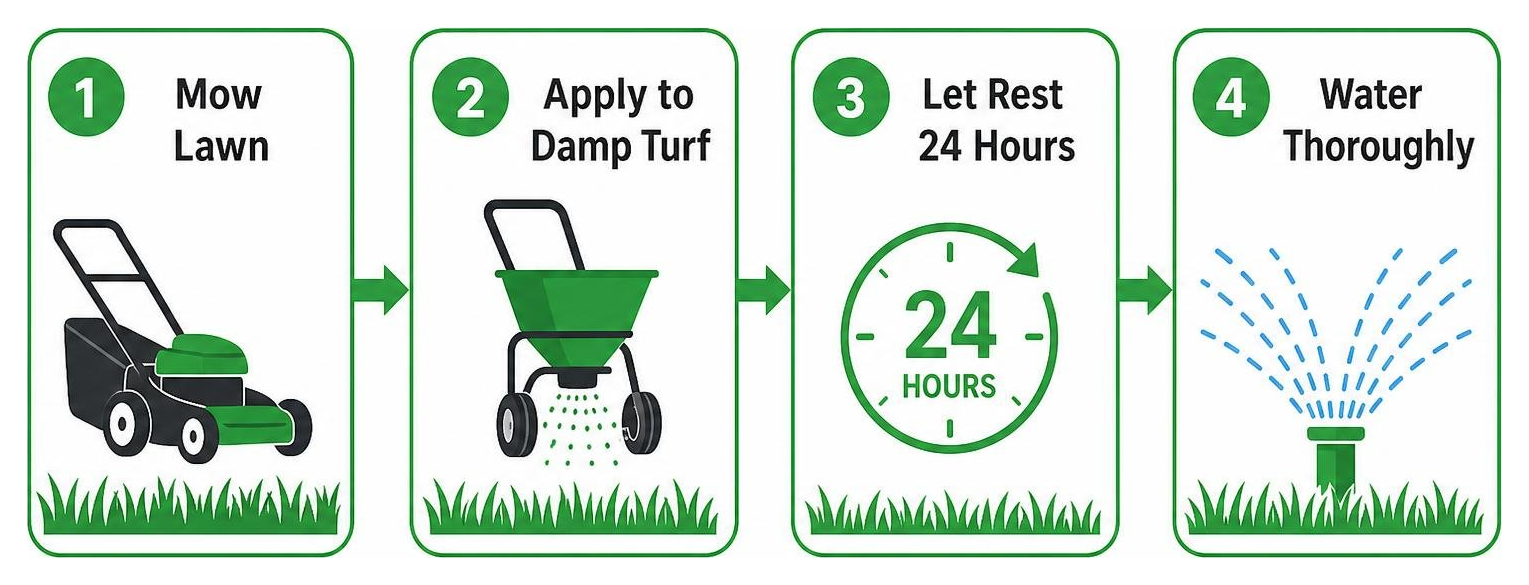
- Mow the Turf: Cut the lawn one to two days before spreading the product.
- Moisten the Grass: Apply the granules early in the morning when morning dew covers the grass blades, or lightly mist the turf first. Moisture helps the herbicide particles stick directly to weed foliage.
- Spread Evenly: Calibrate your equipment to prevent over-application.
- Hold Off on Water: Keep the lawn dry for 24 hours after application so the weed killers absorb properly. Check your local forecast to ensure no heavy rain is predicted.
- Water In: After the 24-hour waiting window, water the lawn with roughly half an inch of water to activate the root-feeding nutrients and pre-emergent barrier.
Never apply this product more than two times to the same lawn in any 12-month timeframe.
Proper Spreader Settings and Coverage Rates
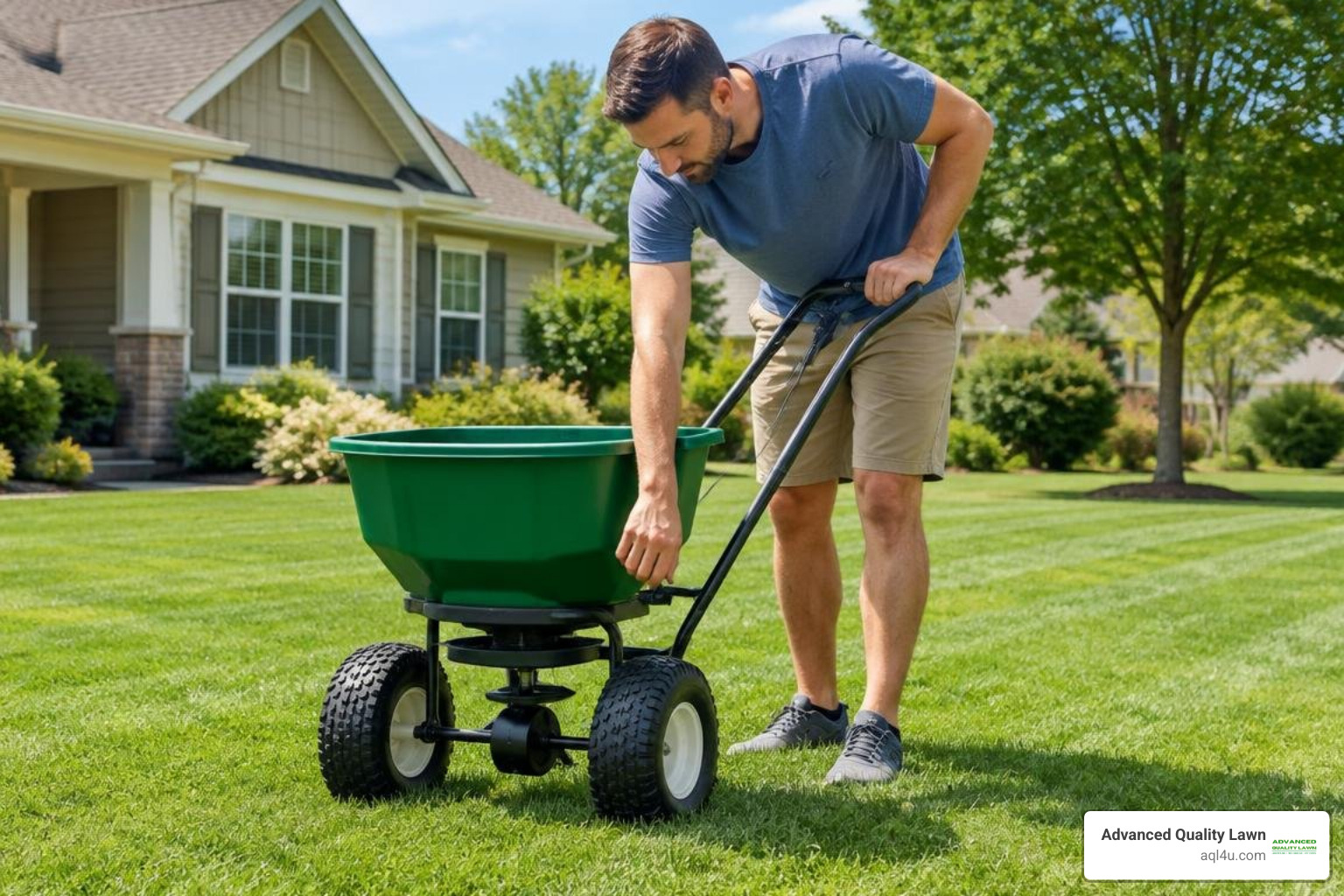
Accurate spreader calibration prevents accidental chemical burning and guarantees uniform weed control. A standard 24 lb bag treats up to 10,000 square feet, which works out to a maximum application rate of 2.4 lb per 1,000 square feet. Smaller yards can use the 9.6 lb bag designed for 4,000 square feet of coverage.
To avoid leaving untreated strips across your yard, use overlapping passes with a broadcast or drop spreader. Walk at a steady, consistent pace of three miles per hour. Always close the spreader hopper gate whenever you stop or turn near garden beds.
Expected Results, Overseeding Intervals, and Lawn Safety
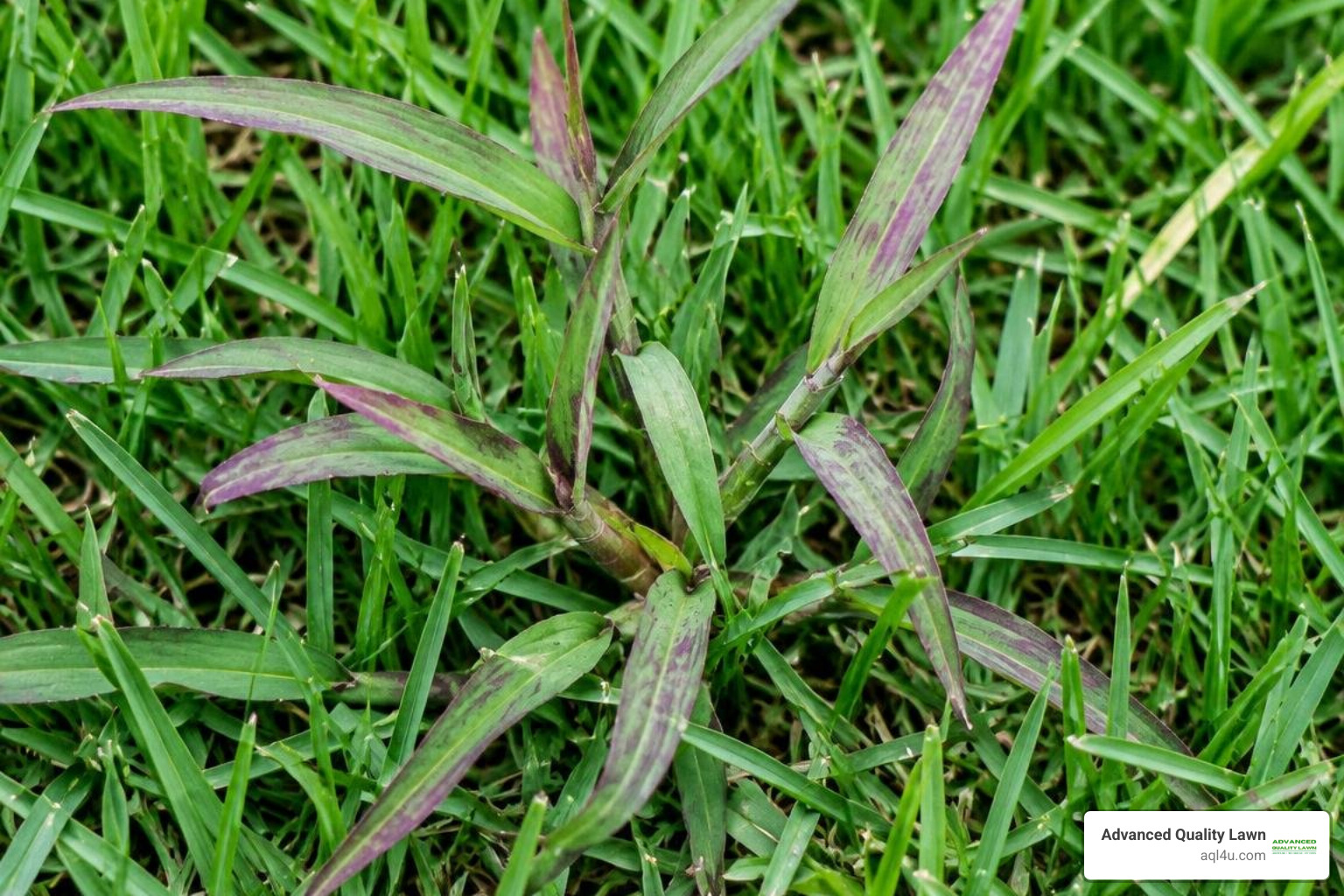
Visible progress begins rapidly once the granules make contact with damp foliage. Susceptible weeds start to droop and twist within a few hours. By day three, target crabgrass typically displays a distinctive purple color, which confirms systemic herbicide absorption. Complete weed mortality occurs within 14 to 28 days as the active ingredients shut down root function.
Because this formula creates a six-month pre-emergent barrier, it stops all seed growth, including desirable grass seed. If you plan to seed bare spots, wait at least four weeks after application. Our guide on seeding and new grass fertilizer timing covers when to switch from weed control to seed development.
Always prioritize safety by wearing long pants, closed-toe shoes, gloves, and protective eyewear when handling chemical granules. Keep pets and family members off the treated grass until the product is watered in and the lawn has dried completely.
Frequently Asked Questions About Multi-Purpose Lawn Care
How long does it take for crabgrass and broadleaf weeds to die after application?
Target weeds begin showing leaf curling and wilting within hours of application. Crabgrass turns purple by the third day, and complete plant death happens within 14 to 28 days.
When is it safe to allow pets and children back onto the treated lawn?
Keep children and pets away from the treated area while spreading the granules. Once you complete the 24-hour waiting period, water the lawn thoroughly, and let the grass blades dry completely, your family can return to the yard.
How long must I wait to reseed or overseed my yard?
You should wait at least four weeks before applying grass seed. The pre-emergent barrier prevents new seeds from germinating properly if you spread them too soon.
Conclusion
Multi-purpose fertilizers provide an efficient way to simplify your seasonal maintenance routine. By feeding your lawn with slow-release nitrogen while managing broadleaf weeds and crabgrass, one bag handles the job of several separate treatments.
For homeowners in Akron, Hudson, Medina, and across Northeast Ohio who want dependable turf health without the guesswork, our team at Advanced Quality Lawn is here to help. Explore our professional lawn maintenance programs to keep your yard thick, green, and completely weed-free all year long.