Nature Knows Best: Why Use Natural Lawn Fertilizer
Why All Natural Lawn Fertilizer Builds a Better Ohio Lawn
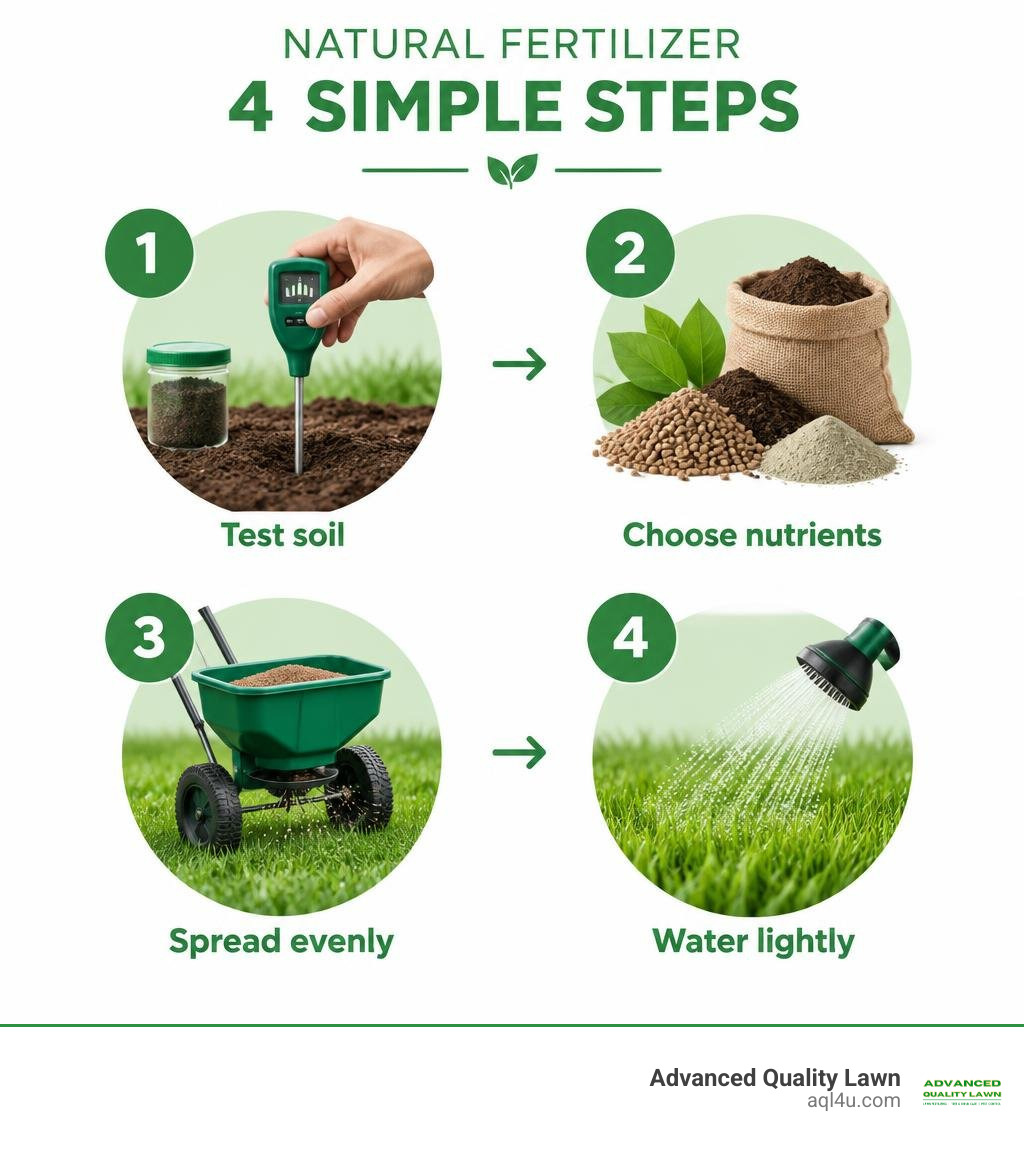
An all natural lawn fertilizer feeds grass with materials such as plant meals, composted organic matter, and natural minerals instead of fast acting synthetic salts. Choose a product based on a soil test, apply it evenly while grass is actively growing, and pair it with smart mowing and watering. The result is steadier growth, stronger roots, and healthier soil that can better handle Northeast Ohio weather.
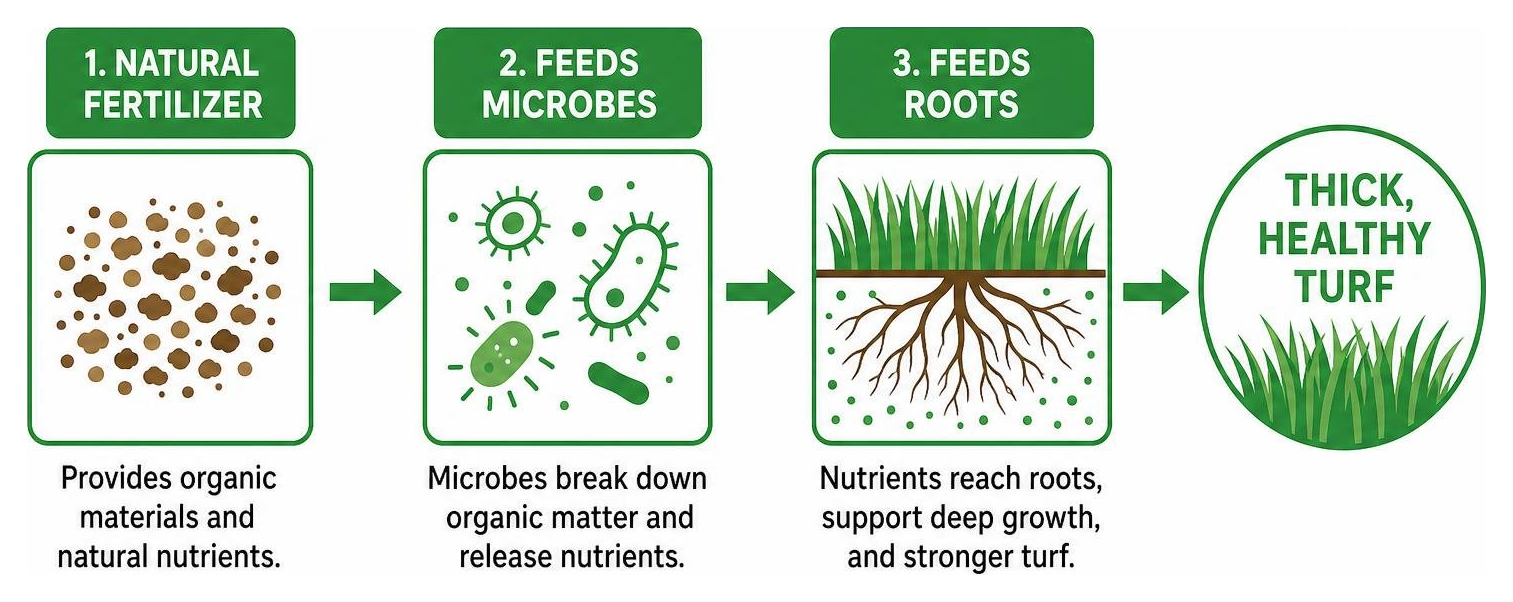
Natural fertilizers work with the soil food web. They release nutrients gradually as microbes break them down, which can improve soil structure, support drought tolerance, and lower the risk of nutrient runoff. They are not a shortcut to a perfect lawn overnight, but they are a practical path to thicker turf with fewer harsh inputs. For a broader look at how organic matter supports turfgrass ecosystems, see the soil organic matter overview.
I am Andrew Day, owner of Advanced Quality Lawn in Northeast Ohio. Our team brings more than 30 years of lawn care experience to helping homeowners choose and use all natural lawn fertilizer as part of a reliable, soil focused care plan.
7 Key Benefits of Choosing an All Natural Lawn Fertilizer
Switching from chemical salts to organic plant food changes the way your turf grows from the soil up. When comparing natural vs synthetic lawn feed, the benefits of organic nutrition extend far beyond simple leaf color.
- Slow and steady nutrient delivery: Natural sources break down through biological activity, providing consistent feeding for up to eight to ten weeks without causing unnatural growth surges.
- Active soil microbiome stimulation: Organic matter feeds beneficial soil microbes and earthworms, creating a biologically active ecosystem that processes nutrients naturally.
- Virtually zero risk of fertilizer burn: Because natural ingredients have a very low salt index, they will not scorch tender grass blades during summer heat.
- Protection for local waterways: Slow-release nutrients bind to soil particles, dramatically reducing nitrogen and phosphorus runoff into local rivers and Lake Erie.
- Worry-free safety for kids and pets: Purely plant-derived and composted ingredients contain no synthetic pesticides or harsh chemical residues, allowing immediate lawn use.
- Superior drought resilience: Organic ingredients improve the water-holding capacity of the soil, keeping your lawn hydrated longer between rainfalls.
- Stronger root architecture: Rather than forcing rapid top growth, natural feeding encourages deep, dense root systems that crowd out weeds naturally.
What Goes Into Eco-Friendly Lawn Nutrition?
Conventional bags use synthetic chemical salts manufactured in factories. In contrast, an eco-friendly blend relies on raw materials from plants, minerals, and carefully processed agricultural sources. In Ohio, having 4 to 6 percent organic matter in the soil is considered satisfactory for maintaining vigorous turfgrass. Natural fertilizers help build and sustain this organic matter baseline over time.
| Natural Ingredient | Primary Nutrient Provided | Typical NPK Value | Release Speed |
|---|---|---|---|
| Hydrolyzed Feather Meal | Slow-Release Nitrogen | 12-0-0 | Slow (6 to 10 weeks) |
| Blood Meal | Rapid Nitrogen | 12-0-0 | Moderate (2 to 4 weeks) |
| Steamed Bone Meal | Phosphorus and Calcium | 3-15-0 | Slow (several months) |
| Composted Poultry Litter | Complete NPK with Calcium | 5-4-3 | Moderate to Slow |
| Soybean Meal | Nitrogen and Amino Acids | 7-1-2 | Moderate |
| Sulfate of Potash | Soluble Potash and Sulfur | 0-0-50 | Moderate |
| Alfalfa Meal | Nitrogen and Growth Hormones | 3-1-2 | Slow |
Essential Ingredients in All Natural Lawn Fertilizer Formulas
The primary powerhouse in many high-protein organic fertilizers is feather meal, which delivers high nitrogen that microbes mineralize across two months. Soybean meal and distillers dried grains offer clean, plant-based nitrogen while giving the granules a mild, grain-like scent instead of foul chemical odors.
Composted poultry litter provides balanced, homogeneous nutrition. High-grade formulas derived from aged poultry litter supply around 5 percent nitrogen, 4 percent phosphorus, and 3 percent potash, alongside essential secondary nutrients like calcium and magnesium. Bone meal supplies steady phosphorus to encourage root establishment in newly seeded lawns, while blood meal provides an early seasonal boost when soil temperatures are still cool.
Soil Conditioners and Bio-Enhancers
The best natural lawn programs do not stop at standard macro-nutrients. Modern organic blends incorporate bio-enhancers that unlock the full potential of your soil. Humic acid and wood biochar act like microscopic sponges, improving cation exchange capacity and helping the soil retain moisture.
Mycorrhizal fungi inoculants establish a symbiotic relationship with grass roots, expanding the root surface area by up to several hundred percent to gather distant water and minerals. Premium blends also feature iron humate to generate deep green turf color without causing sudden top growth. Learning about understanding complete nutrient balance ensures your yard gets these vital micronutrients alongside standard nitrogen.
How to Match Fertilizer to Your Soil and Turf Type
Every lawn in Northeast Ohio has its own unique soil profile. Clay-heavy ground in Summit County holds nutrients differently than loamier ground in Portage or Geauga County. Cool-season grasses like turf-type tall fescue, Kentucky bluegrass, perennial ryegrass, and fine fescue each have distinct nutritional needs.

Before picking any product off the shelf, start with professional lawn soil testing. A comprehensive test reveals your soil pH and identifies existing deficiencies in phosphorus or potassium. If your soil already has high phosphorus levels, choose a zero-phosphorus blend like a 10-0-2 or 11-0-5 formula.
Turf-type tall fescue is exceptionally hardy, requiring only 1 to 3 pounds of total nitrogen per 1,000 square feet annually. Kentucky bluegrass requires a slightly higher nutrient supply to maintain its trademark density. Matching your organic inputs directly to your soil test results ensures you feed the turf precisely what it needs without wasting material.
The Step-by-Step Natural Lawn Care Calendar
Cool-season turf follows a seasonal rhythm that dictates when to apply nutrients. A general rule of thumb for organic feeding is to apply 1 pound of actual nitrogen per 1,000 square feet of lawn during each key window. Learn more about these cycles in our comprehensive lawn fertilization guide and review fundamental fertilizer timing principles.
- Early Spring (April): Apply a light, plant-based fertilizer or corn gluten meal once soil temperatures reach 50 degrees to wake up the turf gently.
- Late Spring (Late May to Early June): Apply a balanced organic blend with slow-release nitrogen to prepare root systems for upcoming summer heat stress.
- Late Summer (Late August to September): This is the single most important feeding window of the year in Ohio. Apply a nutrient-rich organic formula to promote root development and support fall overseeding.
- Late Fall (October to November): Apply a clean organic winterizer high in potassium before the ground freezes. Grass roots store these carbohydrates all winter for rapid spring recovery.
How to Apply All Natural Lawn Fertilizer for Best Results
Even distribution is critical for uniform turf color and growth. Use a calibrated broadcast rotary spreader rather than a drop spreader to avoid creating visible stripes across your lawn.
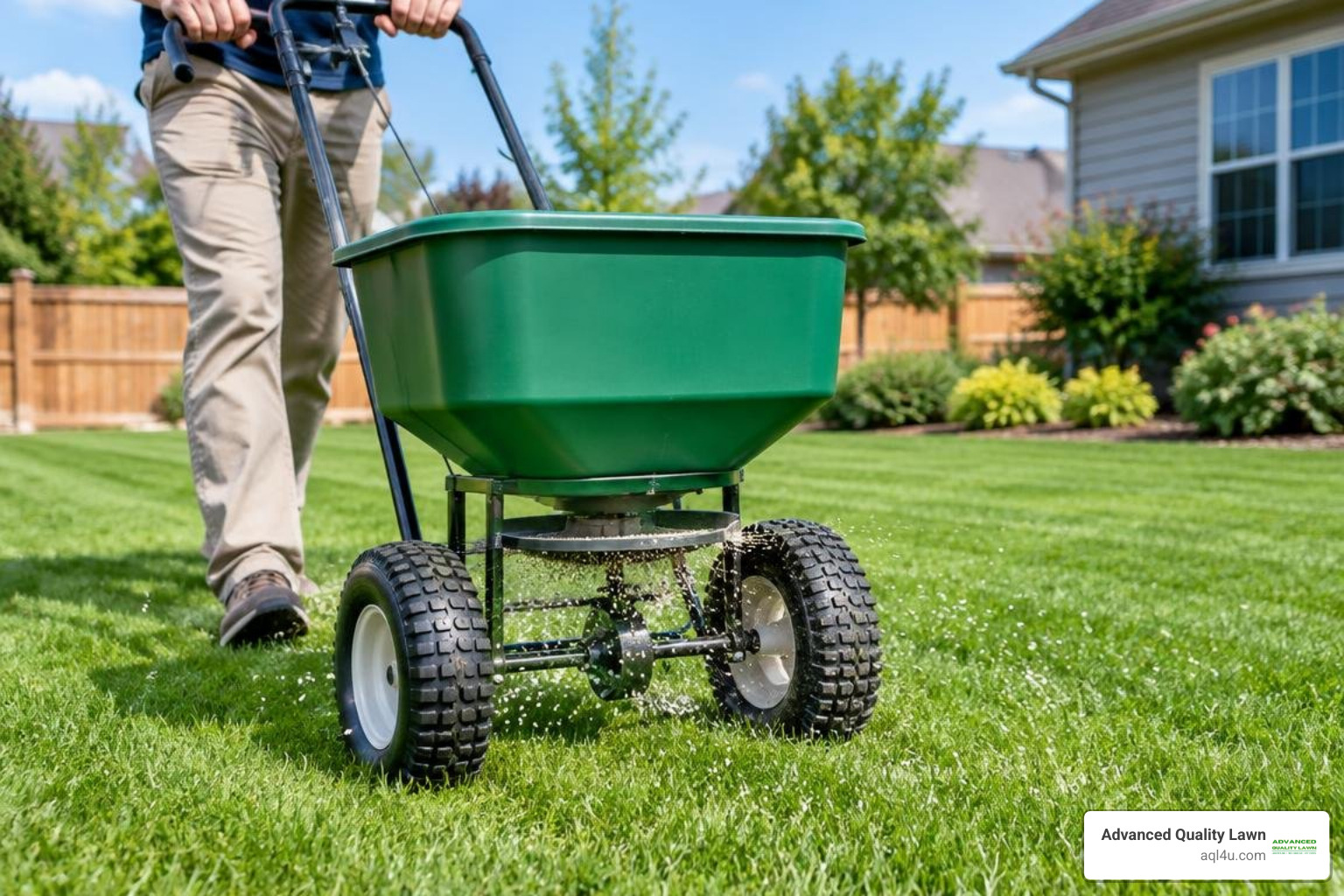
Always apply granular fertilizers to dry grass blades so particles do not stick to the foliage. After spreading, give the yard a light watering of about 0.2 inches to activate the soil microbes and move the granules down to the soil level. Always sweep stray granules off concrete driveways, sidewalks, and patios back onto the turf to protect local storm drains.
Natural Weed Prevention and Nitrogen Recycling
Weed management in an organic lawn program focuses on prevention and density. Corn gluten meal serves as an effective natural pre-emergent barrier that suppresses the root growth of germinating crabgrass seeds while delivering gentle organic nitrogen. You can explore natural pre-emergent weed control options to reduce unwanted sprouts without synthetic chemicals.
Additionally, always use a mulching mower blade. Grass clippings left on the lawn decompose quickly and provide up to 30 percent of a lawn's seasonal nitrogen needs for free.
Essential Cultural Practices to Support an Organic Lawn Program
Organic fertilizers perform best when supported by sound cultural practices. No fertilizer can compensate for poor mowing habits or improper watering routines. Explore our comprehensive lawn care solutions to see how proper maintenance protects your investment.
- Mow High: Set your mower deck to 3.5 or 4 inches. Taller grass shades the soil, keeps roots cool, and naturally blocks weed seeds from receiving sunlight.
- Follow the One-Third Rule: Never remove more than one-third of the total grass blade length during a single mowing session.
- Water Deeply and Infrequently: Provide about 1 inch of water per week, including rainfall. Water early in the morning so grass blades dry quickly in the sun, which prevents fungal disease.
- Core Aerate Annually: Mechanical core aeration relieves soil compaction in Ohio clay, allowing oxygen, water, and organic nutrients to reach deep into the root zone.
- Topdress and Overseed: Spread a thin quarter-inch layer of compost over aerated turf and overseed with endophyte-enhanced grass seed varieties that naturally resist surface-feeding lawn insects.
Frequently Asked Questions About Natural Lawn Care
Can You Over-Fertilize Turf When Using Organic Products?
While natural fertilizers carry a much wider safety margin than synthetic chemical salts, you can still over-apply them. Excessive applications waste money and can lead to nutrient runoff into waterways. Always calculate your square footage accurately and apply no more than 1 pound of actual nitrogen per 1,000 square feet in a single application.
Is Natural Lawn Fertilizer Safe for Pets and Children Immediately After Application?
Yes, pure plant-based and composted fertilizers contain no synthetic weed killers or toxic chemical residues. As soon as the application is finished and the product is watered in to settle any light dust, the lawn is completely safe for children and pets to run and play on.
How Long Does It Take to Transition a Lawn From Synthetic Chemicals to Natural Care?
Transitioning from a conventional chemical regimen usually takes one to two full seasons. Synthetic programs leave soil biology depleted, so microbes need time to repopulate and rebuild natural nutrient cycles. With regular core aeration, overseeding, and organic feeding, your lawn will develop self-sustaining resilience that looks great year after year.
Conclusion
Choosing natural nutrition is the most sustainable way to build a thick, resilient lawn throughout Northeast Ohio. By feeding the living soil ecosystem instead of forcing artificial growth with chemical salts, you create deep roots, improve drought resistance, and keep your property safe for your entire family. At Advanced Quality Lawn, our team delivers dependable lawn care and tree and shrub services backed by decades of experience, full-program guarantees, and dedicated customer support across more than 99 zip codes. Check out our custom lawn care and maintenance programs to start your journey toward a naturally healthy yard today.