The Best Fertilizer to Green Up a Lawn Fast

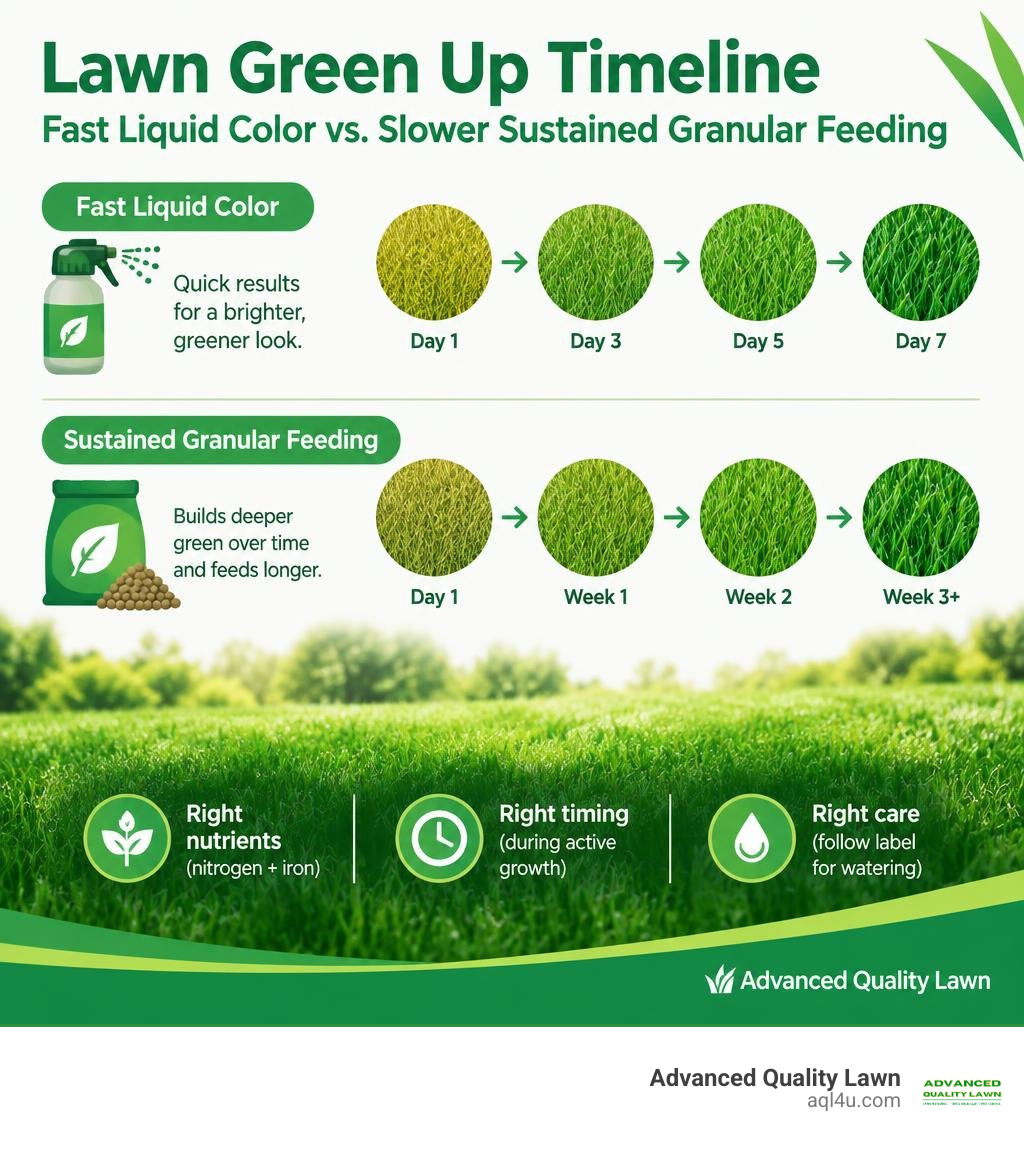
The best fertilizer to green up a lawn fast is a nitrogen fertilizer with iron, applied at the label rate while the grass is actively growing. If the lawn needs deeper color but not more growth, choose an iron supplement instead. A liquid treatment may show a noticeable color change within days. Slow-release fertilizer usually takes weeks but feeds the lawn longer to maintain steady vitality throughout the entire growing season.
Check soil test results before adding phosphorus, and do not fertilize grass that is dormant or stressed by prolonged summer drought. Follow the product label carefully for post-application watering so the treatment reaches the grass roots and foliage without causing chemical burn. Proper moisture management ensures your yard absorbs every nutrient cleanly, safely, and efficiently.
I am Andrew Day, owner of Advanced Quality Lawn in Akron. Our team draws on more than 30 years of industry experience to help local homeowners find the best fertilizer to green up lawn grass and maintain vibrant, resilient turf across every single growing season.
How Fast-Acting Nutrients Deliver Rapid Color
Grass blades require specific elements to build chlorophyll, which gives your yard its rich hue. Products like GREENSHOCKER™ 7-1-2 WITH HUMIC DG™ use quick-release formulas and soil conditioners to jumpstart that process. When grass roots and leaf pores absorb these fast-acting compounds, internal metabolic pathways fire up quickly, transforming dull, yellow turf into a bright emerald carpet. Plants convert these soluble inputs into plant sugars that sustain vigorous growth and repair damaged leaf tissues.
The Science of Iron and Nitrogen for Quick Greening
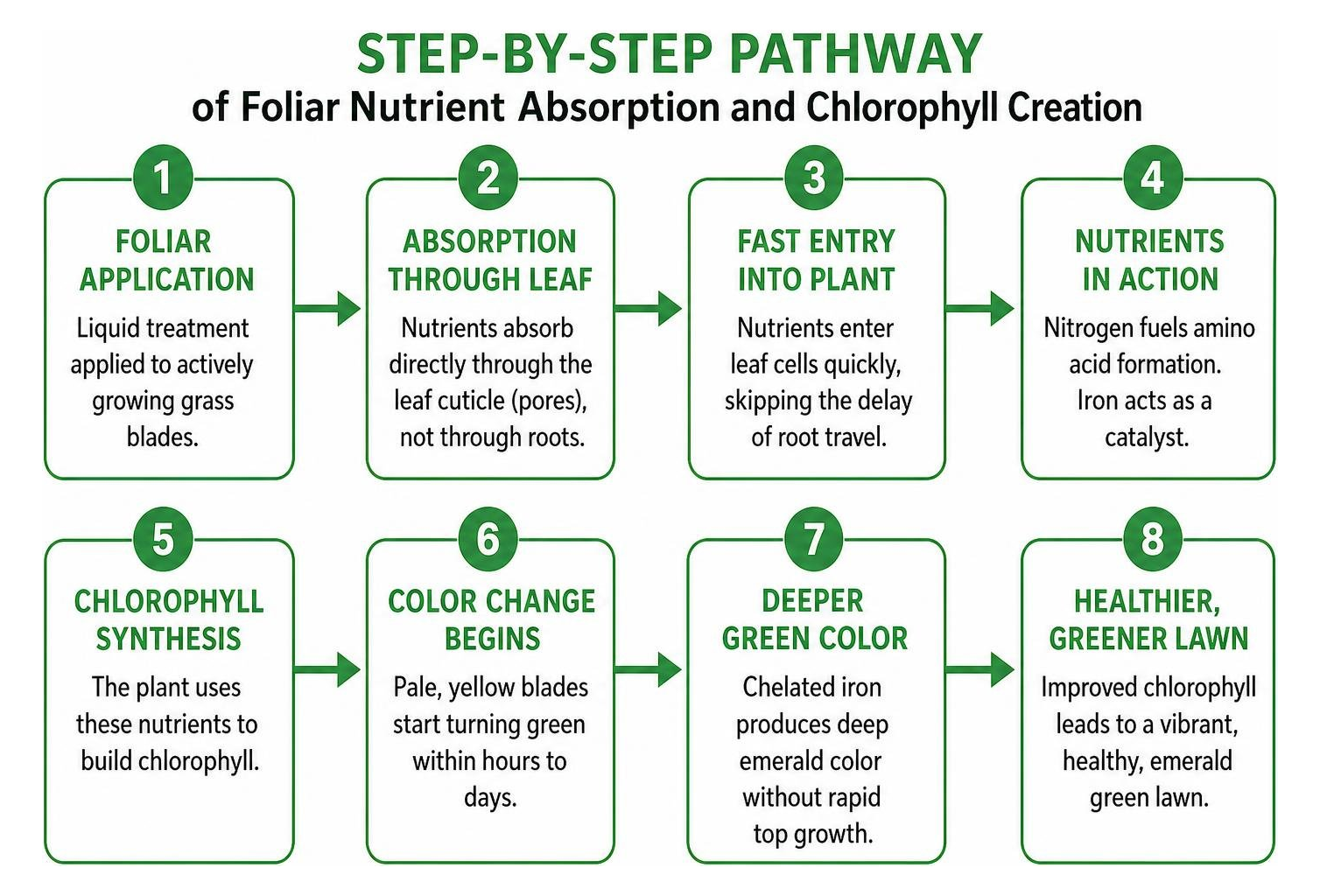
Nitrogen acts as the main building block of plant growth, directly stimulating amino acid formation and chlorophyll production. Chelated iron provides the catalyst that turns pale leaf blades into deep emerald ribbons without forcing rapid vertical growth. To explore the biological triggers behind lawn color variations, look into understanding why some grass appears greener than others. When iron binds with key enzymes, it promotes rapid photosynthesis without draining root energy reserves.
Grass absorbs liquid iron supplements directly through the leaf cuticle. This foliar uptake skips the delay of root travel, jumpstarting chlorophyll synthesis within hours. Mastering lawn fertilizer fundamentals lets you pair quick nitrogen with foliar iron to correct yellow patches and produce rapid color changes safely. Combining both elements ensures quick visual improvement while simultaneously strengthening the cellular structure of individual grass blades.
Finding the Best Fertilizer to Green Up Lawn Turf with Balanced NPK
Finding the best fertilizer to green up lawn turf requires balancing nitrogen with root-supporting macronutrients. A 4-1-2 or 4-0-2 ratio offers an ideal balance for established turf, delivering ample nitrogen alongside potassium for heat and drought tolerance. Many homeowners see dependable results with liquid 16-4-8 fertilizer blends, which provide balanced nourishment across 3,200 square feet per quart. Potassium fortifies internal cell walls, helping the grass withstand foot traffic, temperature swings, and seasonal stress.
Many regional soil conditions naturally contain sufficient phosphorus. Choosing zero-phosphorus formulas prevents environmental runoff into local waterways. Relying on balanced fertilizer applications ensures healthy root growth, keeping turf resilient through changing seasonal weather. A consistent, well-planned balance of macro and micronutrients keeps your lawn vibrant and deeply green throughout the entire year.
Choosing the Best Fertilizer to Green Up a Lawn: Liquid vs. Granular
Liquid feeds and granular products each offer unique benefits for home turf. Liquid formulas deliver nutrients directly to the leaf tissue, creating visible greening in as little as 3 days. Granular fertilizers with polymer-coated urea release their payload gradually over 6 to 8 weeks, creating a durable foundation. Choosing between them depends on whether your yard requires an urgent cosmetic boost or sustained seasonal nourishment. Homeowners often combine both formats to achieve immediate richness alongside enduring strength.
| Feature | Fast-Acting Liquid Fertilizer | Slow-Release Granular Fertilizer |
|---|---|---|
| Time to Visible Color | 3 to 5 days | 2 to 4 weeks |
| Feeding Longevity | 2 to 4 weeks | 6 to 8 weeks |
| Application Tool | Hose-end or pump sprayer | Broadcast spreader |
| Lawn Burn Risk | Low when diluted properly | Moderate if over-applied |
| Primary Uptake Path | Direct foliar and shallow roots | Deep root system absorption |
To explore specialized spray options, read through Best Liquid Lawn Fertilizer (2026): Tested and Ranked by Need. Combining liquid treatments for quick color with a solid base program creates reliable results, as outlined in our comprehensive lawn fertilizer guide. A dual approach provides immediate visual satisfaction while supporting long-term root health.
Selecting the Best Fertilizer to Green Up Lawn Grass by Season and Species
Cool-season grasses such as Kentucky bluegrass, tall fescue, and perennial ryegrass thrive during moderate weather. Start fertilizing in spring once soil temperatures consistently hit 55 degrees Fahrenheit, following proven early spring lawn fertilizer strategies. Spring applications replenish energy stores depleted over the cold months, encouraging healthy green shoots to emerge uniformly across your entire lawn.
Avoid pushing high nitrogen rates during summer heat waves. Instead, shift to iron-heavy liquids or low-nitrogen organic options to protect cool-season turf. Return to high-nitrogen feeding when temperatures cool, following fall lawn fertilization timing to build dense root reserves before winter dormancy. Proper seasonal timing ensures your turf stays hardy against cold winter stress.
Synthetic vs. Natural Formulas for Green Results
Quick-release synthetic fertilizers offer fast color by dissolving immediately in soil water. Natural organic fertilizers use bio-solids, feather meal, and composted poultry waste to feed soil microbes and build organic structure over time. Research reviews such as The Best Organic Lawn Fertilizers of 2026, Tested and Reviewed highlight how organic formulas build long-term soil health.
When comparing organic and synthetic fertilizers, consider both timing and lawn goals. Synthetic products correct severe pale conditions quickly, while natural formulas provide steady feeding without sudden growth spikes. Adding humic acid alongside either approach improves micronutrient uptake and creates deeper color. Microbial activity thrives when natural organic matter enriches the soil bed. Healthy soil biology supports stronger roots, superior moisture retention, and lasting lawn defense.
Step-by-Step Guide: How to Apply Fertilizer for Rapid Green-Up Without Burn
Mow the Grass First
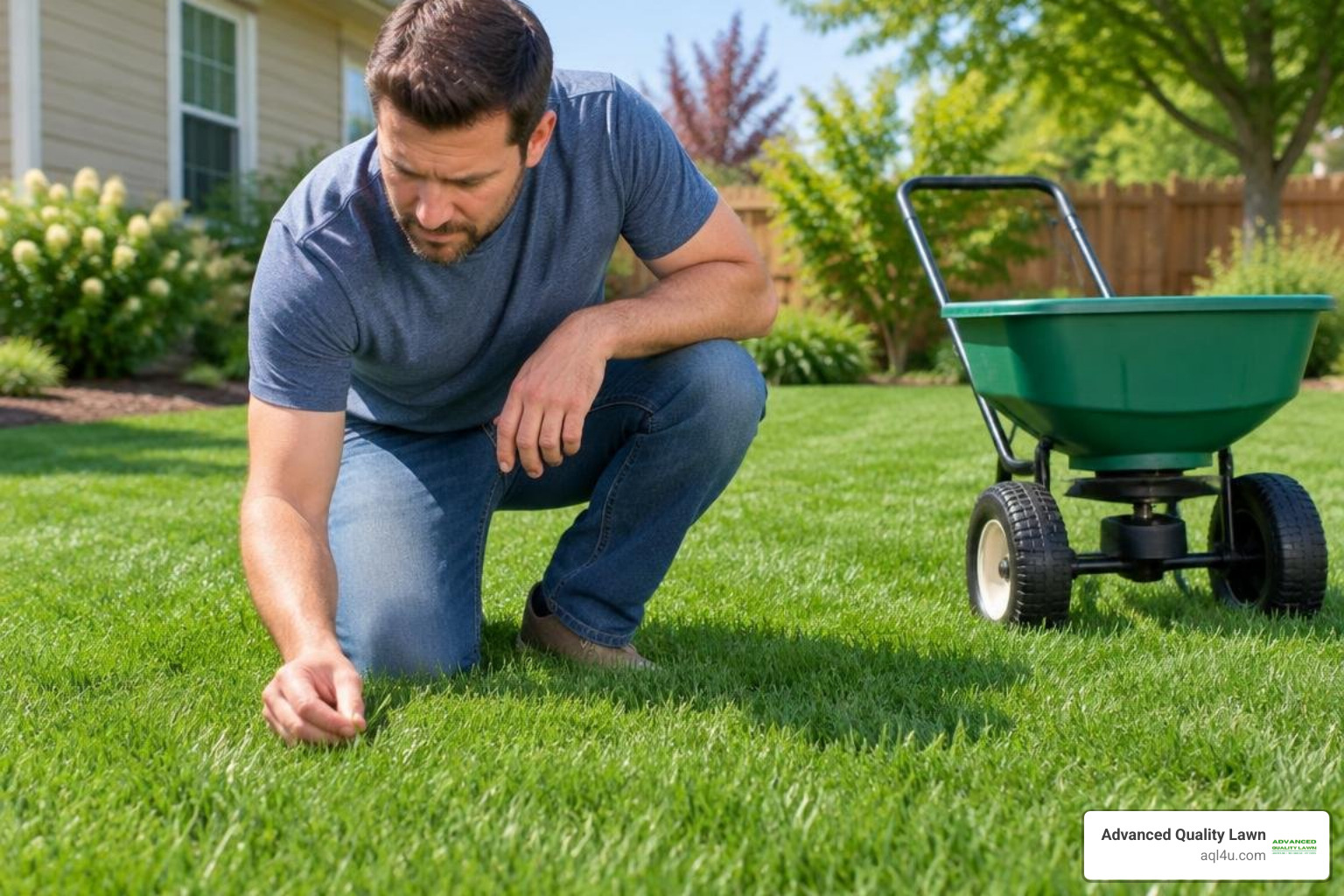
Mow the lawn one or two days before fertilizing at your target turf height. Removing excess leaf height allows granules to drop cleanly to the soil and gives liquid sprays full surface contact with grass blades. Clean mowing also removes weed heads and creates an orderly surface for uniform coverage.Check Your Spreader or Sprayer Calibration
Review the product label settings for your specific equipment. Calibrate broadcast spreaders on a paved driveway or clean tarp to ensure accurate output rates and prevent accidental overfeeding. Testing equipment before filling ensures that you never apply too much fertilizer.Divide the Application into Half-Rate Cross Passes
Set the spreader to half the recommended rate. Apply one half walking in parallel north-south lines, then apply the remaining half walking east-west. This crisscross pattern prevents uneven green stripes and skips. Balanced coverage guarantees uniform color.Maintain Consistent Walking Speed and Spray Distance
Keep a steady walking pace with your spreader. When using a hose-end liquid sprayer, keep the spray nozzle level with overlapping, steady sweeping motions to distribute liquid evenly across every square foot. Uniform pace prevents hot spots.Water the Lawn Properly After Application
Apply 0.2 to 0.5 inches of water immediately after applying granular products to move vital nutrients into the root zone. When applying foliar iron liquids, let the spray dry on grass blades for 3 to 4 hours before watering, supporting effective proper lawn watering practices. This hydration routine maximizes nutrient absorption while protecting tender grass tips and delicate roots.
Common Mistakes That Cause Lawn Burn and Uneven Color
Fertilizing During Extreme Afternoon Heat
Applying high-nitrogen products when air temperatures exceed 85 degrees Fahrenheit stresses grass tissue and damages foliage, especially without proper steps for preventing summer lawn heat stress. High heat causes rapid chemical evaporation that scorches tender leaves. Morning applications prevent this heat damage completely.Overlapping Spreader Passes Carelessly
Piling fertilizer along wheel turns leads to high salt levels in the soil. These concentrated salts pull moisture out of roots, leaving brown burn stripes that take months to recover. Careful wheel tracking ensures uniform results.Filling Spreaders on the Turf
Accidental spills on open grass concentrate chemicals and kill turf patches. Always load sprayers and spreaders on driveways, patios, or garage floors where spills can be swept up cleanly.Neglecting Cleanup on Hard Surfaces
Leaving fertilizer on sidewalks or driveways leads to rain runoff into municipal storm drains. Sweep stray granules back onto turf areas right after application to protect local water systems. Paved surfaces must stay clean.
Frequently Asked Questions About Lawn Greening
How long does it take for fertilizer to green up grass?
Fast-acting liquid nitrogen and foliar iron sprays can show visible greening within 3 to 5 days. Granular synthetic fertilizers generally show results within 7 to 10 days, while slow-release organic meals take 2 to 4 weeks to break down and feed root systems. Soil temperature and moisture levels also influence how fast grass absorbs available nutrients.
Can iron supplement fertilizer green up grass without causing extra mowing?
Chelated liquid iron improves chlorophyll synthesis to produce deep emerald color without stimulating vertical growth. This allows you to improve turf color during warm periods without creating excessive weekly mowing. It is an ideal solution for maintaining dark turf during summer months when excessive blade growth can weaken root systems.
What is the ideal temperature to apply fertilizer for fast green color?
The best temperature range for cool-season turf feeding sits between 50 and 80 degrees Fahrenheit. Applying fertilizers during mild morning hours allows blades to take in nutrients safely before midday heat. Avoid applications when afternoon temperatures climb above 85 degrees Fahrenheit.
Conclusion
Getting a vibrant green lawn does not have to involve confusing trial and error. Matching your fertilizer formula to seasonal turf needs and following careful application steps lets you build deep color without risk of lawn burn. Consistent feeding and smart watering create a thick, resilient turf that naturally resists weeds and weather stress.
For homeowners in Akron and nearby communities who want dependable results without the weekend work, our experienced team provides custom solutions and complete satisfaction guarantees. Explore our professional lawn care and maintenance programs to keep your yard thriving and healthy through every season. Our local specialists ensure your grass receives superior seasonal care.