
The Best Way to Kill Weeds and Crabgrass Without Damaging Your Turf
Find a Crabgrass Killer That Protects Your Lawn
The best crabgrass killer that won't kill grass depends on whether the weed has sprouted and what type of turf you grow. Use a selective pre-emergent such as prodiamine to stop crabgrass before it germinates, or choose a grass-safe post-emergent for visible plants. Dithiopyr can do both, but only kills very young crabgrass after it emerges.
The key is matching the active ingredient to your lawn. Fenoxaprop-p-ethyl and topramezone are options for certain cool-season lawns, including many fescue and Kentucky bluegrass lawns, but can seriously injure warm-season turf such as Bermuda or St. Augustine. Always confirm your grass type and read the product label before spraying or spreading.
Crabgrass is an annual weed that takes advantage of thin turf, compacted soil, and hot Ohio summers. The products in this guide compare the most effective lawn-safe choices, plus the timing and watering steps that help protect your healthy grass.
I am Andrew Day, owner of Advanced Quality Lawn, and our team brings more than 30 years of lawn care experience to diagnosing turf and weed problems in Northeast Ohio. We help homeowners choose the best crabgrass killer that won't kill grass and build healthier lawns that leave less room for weeds to return.
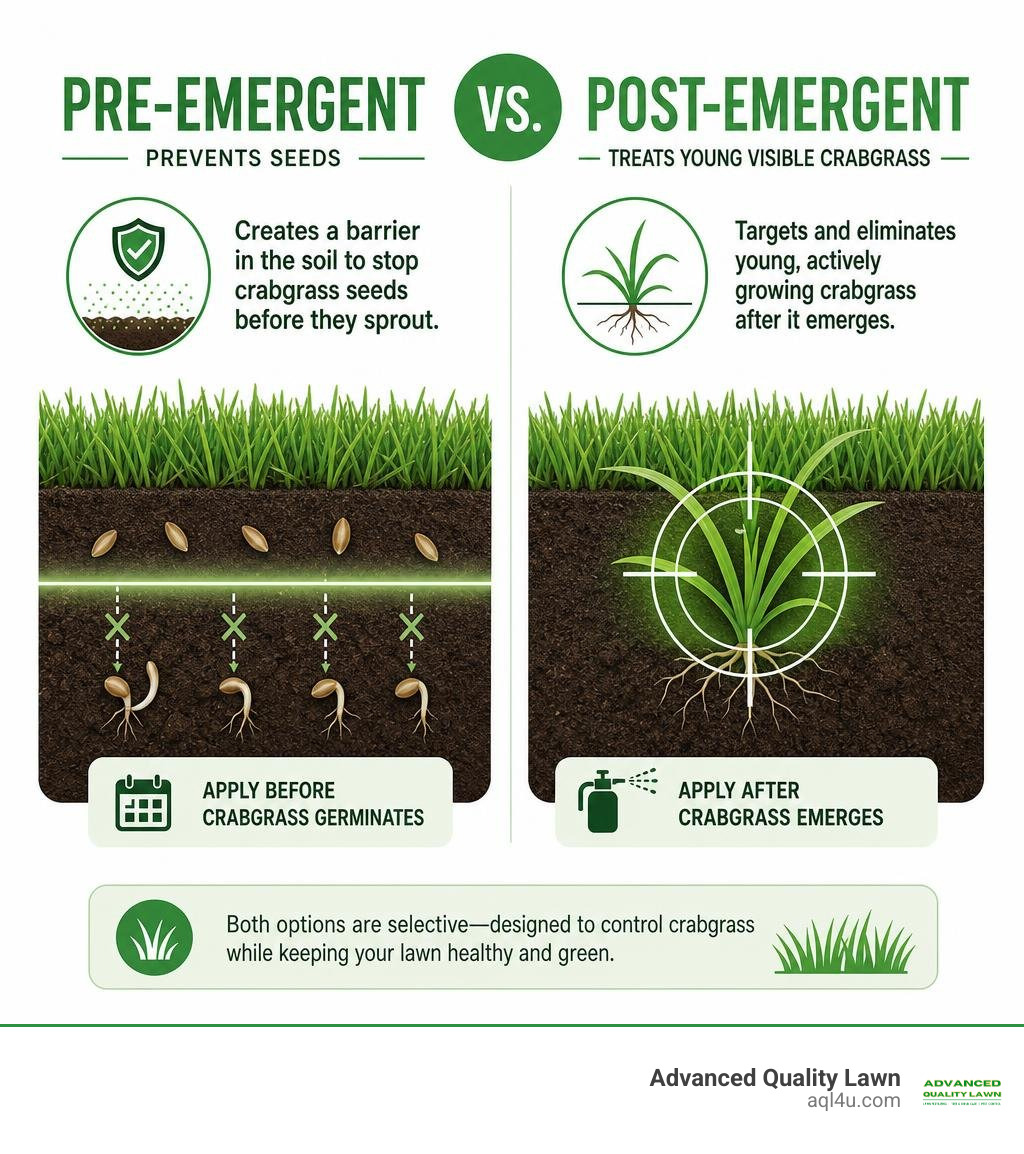
Pre-Emergent vs. Post-Emergent Crabgrass Control: How Selective Herbicides Protect Turf
Controlling unwanted grassy weeds without harming desirable turfgrass comes down to selectivity and timing. Selective herbicides target specific biological pathways inside weeds while leaving your lawn grass unharmed. Non-selective herbicides such as glyphosate kill any green plant they contact, which turns your lawn brown.
The two primary categories of weed control are pre-emergent and post-emergent herbicides. Pre-emergents create an invisible vapor barrier in the upper half-inch of the soil profile. When weed seeds sprout in the spring, the active ingredient halts root cell division, preventing seedlings from breaking through the surface.
Post-emergent products target active foliage after plants have emerged. Some ingredients, such as dithiopyr post emergent options, offer an early post-emergence window of up to 4 weeks on crabgrass seedlings before they reach the early tiller stage.
| Feature | Pre-Emergent Herbicides | Post-Emergent Herbicides | Dual-Action Products (e.g., Dithiopyr) |
|---|---|---|---|
| Primary Goal | Stop seed germination | Kill visible, active weeds | Stop germination plus kill early seedlings |
| Application Timing | Early spring at 50°F to 55°F soil temp | Late spring through summer on visible weeds | Early spring through early summer |
| Target Plant Stage | Seeds and germinating root tips | Emerged plants and multi-tiller clumps | Seeds and young 1-to-3 leaf seedlings |
| Lawn Safety Mechanism | Established turf roots sit deeper than the barrier | Biochemical pathways unique to weed species | Shallow root inhibition and foliar uptake |
| Watering Requirement | Requires 0.5 inches of water to activate | Must dry on leaf surface before rain | Requires watering for barrier after foliar uptake |
How Pre-Emergent Barriers Stop Crabgrass Germination
A selective pre-emergent herbicide establishes a chemical layer across your soil. As crabgrass seeds absorb spring moisture and begin to sprout, their emerging roots touch this layer and stop growing. Because your established lawn already has deep roots anchored below this top inch of soil, the chemical does not affect your established turf.
Using the best pre-emergent weed killer for lawns gives you long-lasting residual control. For example, Crabgrass Control Plus 0-0-7 Prodiamine Specs highlight how a 0.37% Prodiamine concentration carried on a potassium-rich 0-0-7 fertilizer helps build root resilience without forcing unnecessary leafy top growth during early spring. A single 50 lb bag provides up to 12,500 square feet of coverage, blocking weed emergence while your lawn wakes up from winter.
How Post-Emergent Treatments Target Weeds to the Root
When crabgrass slips past a pre-emergent barrier, you need a selective post-emergent spray. These products use foliar absorption to move the active ingredient throughout the weed down into the root system.
Selecting the best herbicide for crabgrass depends on how the weed processes chemical compounds. Modern selective post-emergents use specialized modes of action. Topramezone functions as an HPPD inhibitor, disrupting pigment synthesis and causing targeted crabgrass to turn bright white within 4 to 7 days before it withers away. Fenoxaprop-p-ethyl targets fatty acid production in grassy weeds, stopping new cell growth while keeping your lawn green and intact.

Choosing the Best Crabgrass Killer That Won't Kill Grass for Your Lawn Type
No single weed control product is completely safe for every grass species. A chemical that safely removes weeds from a tall fescue lawn can quickly destroy warm-season turf types.
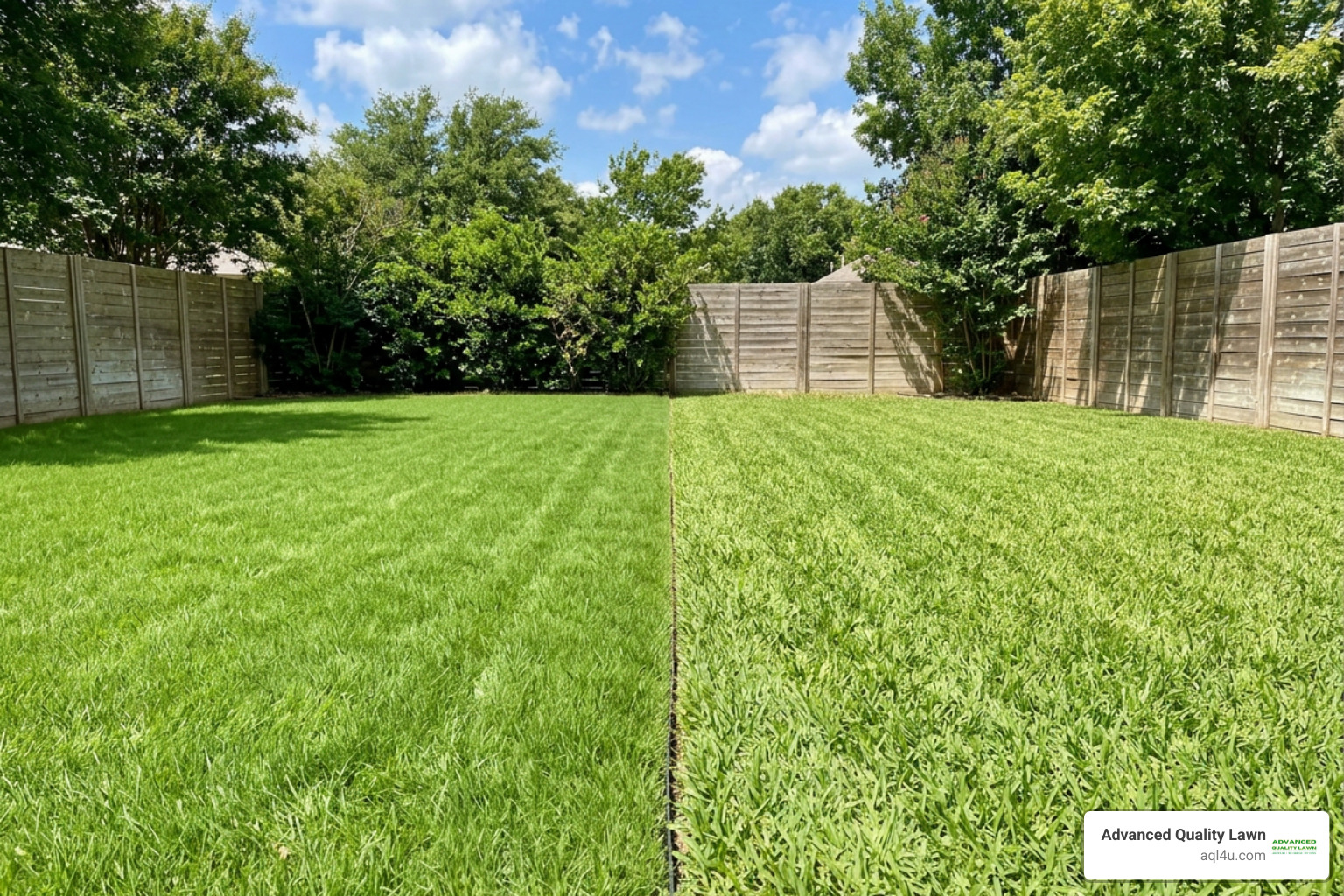
Before choosing any chemical, identify the turf species growing in your yard. Following our crabgrass control guide 2026 helps you match herbicide tolerance with your grass type.
Safe Treatments for Cool-Season Grasses (Fescue, Bluegrass, Ryegrass)
Homeowners across Northeast Ohio, from Akron and Cuyahoga Falls to Medina and Hudson, manage cool-season turf blends. Kentucky bluegrass, tall fescue, and perennial ryegrass handle selective herbicides exceptionally well when temperatures stay below 90°F.
When shopping for the best crabgrass killer for lawns with cool-season grass, look for products formulated with Topramezone or Fenoxaprop-p-ethyl. The Roundup for Lawns Crabgrass Destroyer2 Label confirms safety on Kentucky bluegrass, fine fescue, perennial ryegrass, and tall fescue. You might notice slight, temporary bleaching or yellowing on some bluegrass blades, but the root system remains completely healthy while the crabgrass dies.
Safe Treatments for Warm-Season Grasses (Bermuda, Zoysia, St. Augustine)
Warm-season lawns such as Bermudagrass, Zoysia, and St. Augustine have distinct metabolic tolerances. Products containing Fenoxaprop-p-ethyl or Topramezone should never be applied to these turfgrasses because they can cause severe injury.
Instead, warm-season yards require specialized approaches. Review our zoysia crabgrass kill guide 2026 or our crabgrass control centipede lawns guide to avoid phytotoxicity. Prodiamine and Dithiopyr remain safe pre-emergent choices for most warm-season grasses as long as you do not exceed annual label application rates.
Top Active Ingredients for Lawn-Safe Crabgrass Eradication
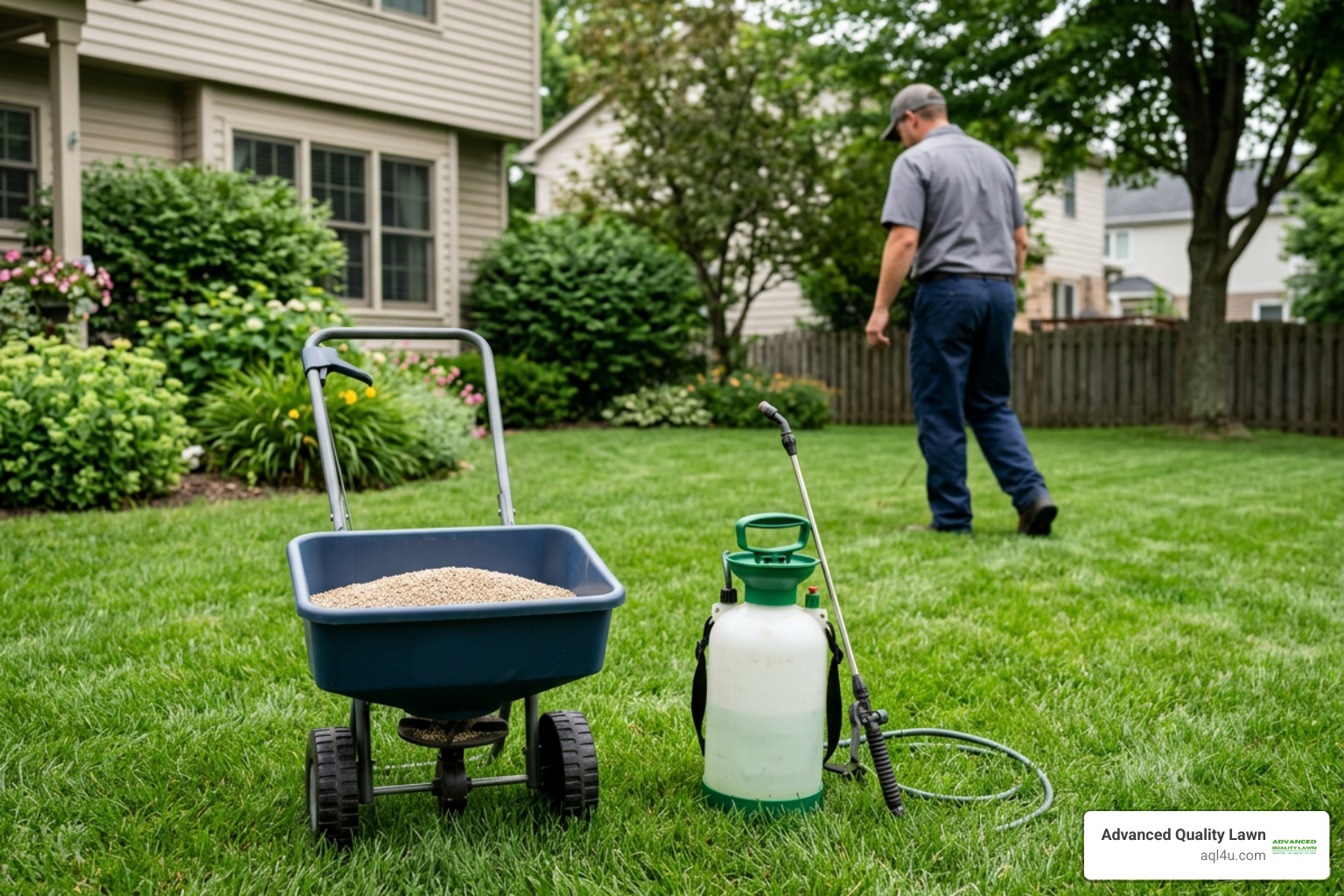
Choosing between granular and liquid options comes down to equipment, lawn size, and the growth stage of the weed. Finding the best lawn spray for crabgrass or the right granular preventer starts with understanding active ingredients.
Top Pre-Emergent Formulations: The Best Crabgrass Killer That Won't Kill Grass Before Germination
Pre-emergent active ingredients excel at stopping weeds before they ever show their leaves:
- Prodiamine: Provides exceptionally long residual control lasting up to 4 to 6 months. It has very low turf toxicity on established cool-season lawns.
- Dithiopyr: Offers up to 4 months of residual barrier protection and controls very young crabgrass seedlings up to 4 weeks after germination. The Preen Lawn Crabgrass Control Details outline how this dual action keeps lawns weed-free through changing spring conditions.
- Benefin and Trifluralin: Commonly formulated together in granular blends such as Hi-Yield Crabgrass Control. These ingredients deliver reliable early season protection across established turf varieties when watered in thoroughly.
Selective Post-Emergents: The Best Crabgrass Killer That Won't Kill Grass After Sprouting
When crabgrass plants are already spreading across your yard, selective post-emergent ingredients provide targeted control:
- Fenoxaprop-p-ethyl: Found in products like Bayer Advanced Crabgrass Killer for Lawns. It absorbs rapidly through the leaf tissue, becomes rainproof in 1 hour, and controls smooth and large crabgrass in cool-season lawns.
- Topramezone: The active ingredient in Roundup for Lawns Crabgrass Destroyer2. It bleaches grassy weeds down to the root while protecting desirable bluegrass and fescue.
- Quinclorac: A trusted post-emergent that controls large, mature, multi-tiller crabgrass. It is frequently blended into a broadleaf and crabgrass herbicide to knock out dandelions, clover, and crabgrass in a single spray application.
Best Application Practices: Timing, Watering, and Reseeding Protocols
Even the best products can fail or damage turf if applied incorrectly. Timing your application based on local conditions is the best way to get rid of crabgrass without stressing your lawn.
In Northeast Ohio, crabgrass begins germinating when soil temperatures reach 55°F at a 2-inch depth for four to five consecutive days. This usually aligns with the blooming of yellow forsythia bushes in mid-spring. Spreading pre-emergent in early spring provides a continuous barrier before summer heat arrives.
Watering-In vs. Foliar Drying Rules
Granular pre-emergents and liquid post-emergents have completely opposite watering requirements:
- Granular Pre-Emergents: Must be watered into the top layer of soil with roughly 0.5 inches of irrigation or rainfall within 14 days of application. The water dissolves the granules and sets the protective barrier.
- Liquid Post-Emergents: Must dry completely on the weed leaves to ensure foliar absorption. Never irrigate or apply liquid post-emergents if heavy rain is expected within 24 hours.
If you are concerned about family safety, choosing a pet safe pre emergent routine simply requires keeping kids and pets off the treated grass until granular products are watered in and completely dry.
Managing Reseeding and Overseeding Windows
Pre-emergent herbicides cannot tell the difference between a crabgrass seed and a desirable grass seed. If you plan to overseed your lawn, you must carefully plan your treatment schedule.
Our crabgrass preventer safe seeding guide outlines safe waiting intervals. Prodiamine and Benefin/Trifluralin require waiting anywhere from 8 to 16 weeks before planting new grass seed. Topramezone allows for seeding on the same day as application, but you must avoid applying it for 28 days following turfgrass emergence. Core aeration should always be completed before applying pre-emergents to prevent punching holes in the chemical shield.
Frequently Asked Questions About Crabgrass Killer Lawn Safety
Can a single herbicide both prevent and kill emerged crabgrass?
Yes, products formulated with Dithiopyr provide both pre-emergent prevention and early post-emergent control. Dithiopyr prevents seeds from sprouting and can kill young crabgrass seedlings up to 4 weeks after germination, provided the weed has not grown past the early tiller stage. Once crabgrass develops into large, multi-stem clumps, a dedicated post-emergent such as Quinclorac or Topramezone is necessary.
When is it safe for kids and pets to enter treated lawns?
For liquid sprays, children and pets can return to the lawn once the liquid has dried completely, which typically takes 2 to 4 hours depending on temperature and humidity. For granular pre-emergents, keep pets and family off the lawn until the product has been watered in with 0.5 inches of water and the grass has fully dried.
What should you do if you overseed after applying pre-emergent?
If you mistakenly spread grass seed over a fresh pre-emergent barrier, the seed will likely fail to germinate. To fix small bare patches, dig out the top two inches of treated soil in that area, fill the spot with fresh topsoil, and reseed. Otherwise, focus on keeping your existing turf healthy through summer and schedule your overseeding project for late summer or early fall once the herbicide barrier naturally breaks down.
Conclusion
Eliminating crabgrass without damaging your turf comes down to choosing selective active ingredients, checking your grass type, and applying at the correct soil temperatures. A dependable pre-emergent applied in early spring creates an invisible barrier that blocks weeds, while targeted post-emergents handle stray weeds in summer.
At Advanced Quality Lawn, our team delivers complete weed control and turf care solutions across 99+ zip codes in Northeast Ohio, including Summit, Stark, Medina, Cuyahoga, Portage, Geauga, and Lorain counties. Whether you need help diagnosing lawn issues or want full season turf protection backed by our service guarantees, check out our Professional Lawn Care and Maintenance programs to keep your yard healthy and weed-free all year long.